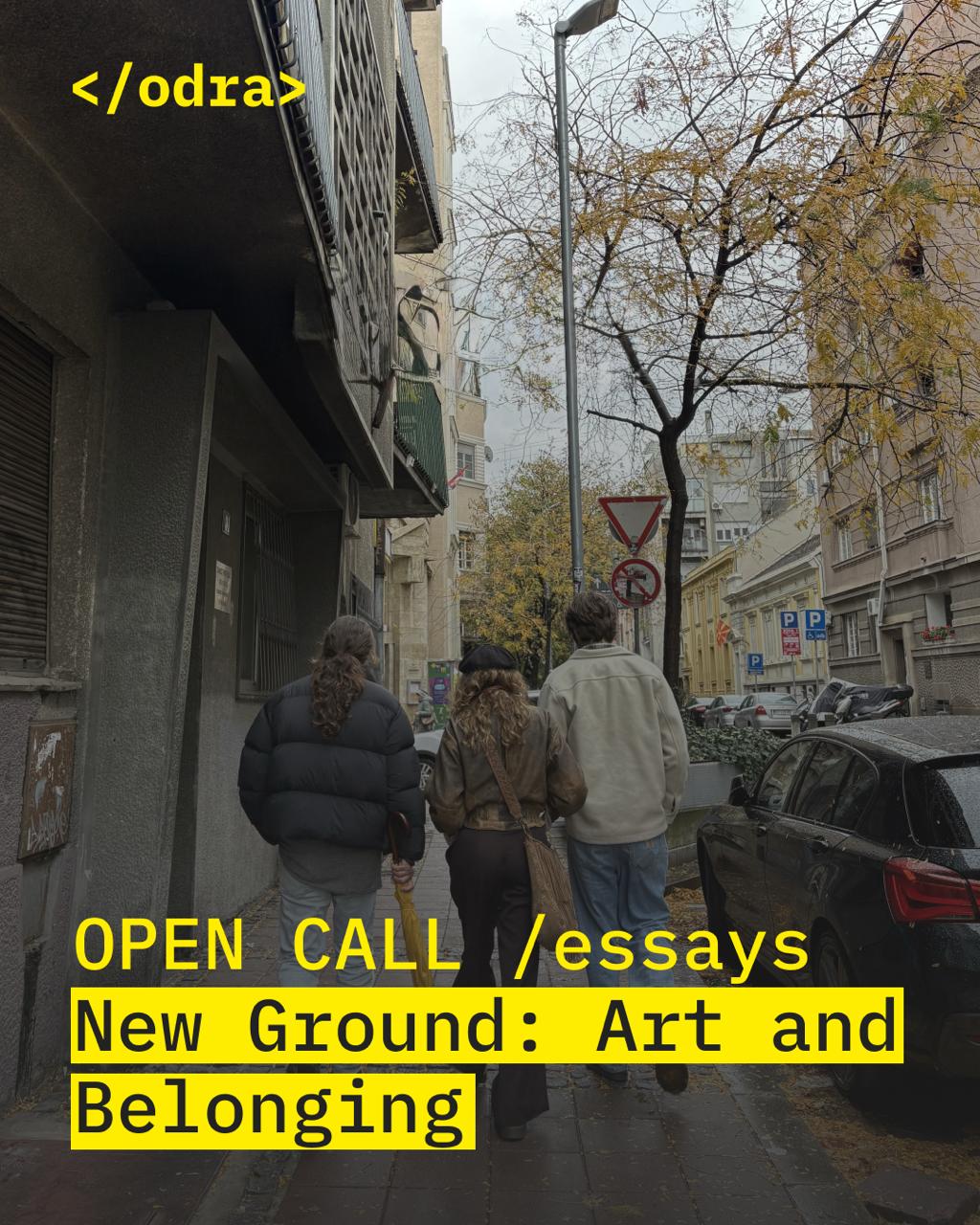
New Ground: Art and Belonging, Open Call for Essays
Deadline: 15/11/2026ODRA Platform
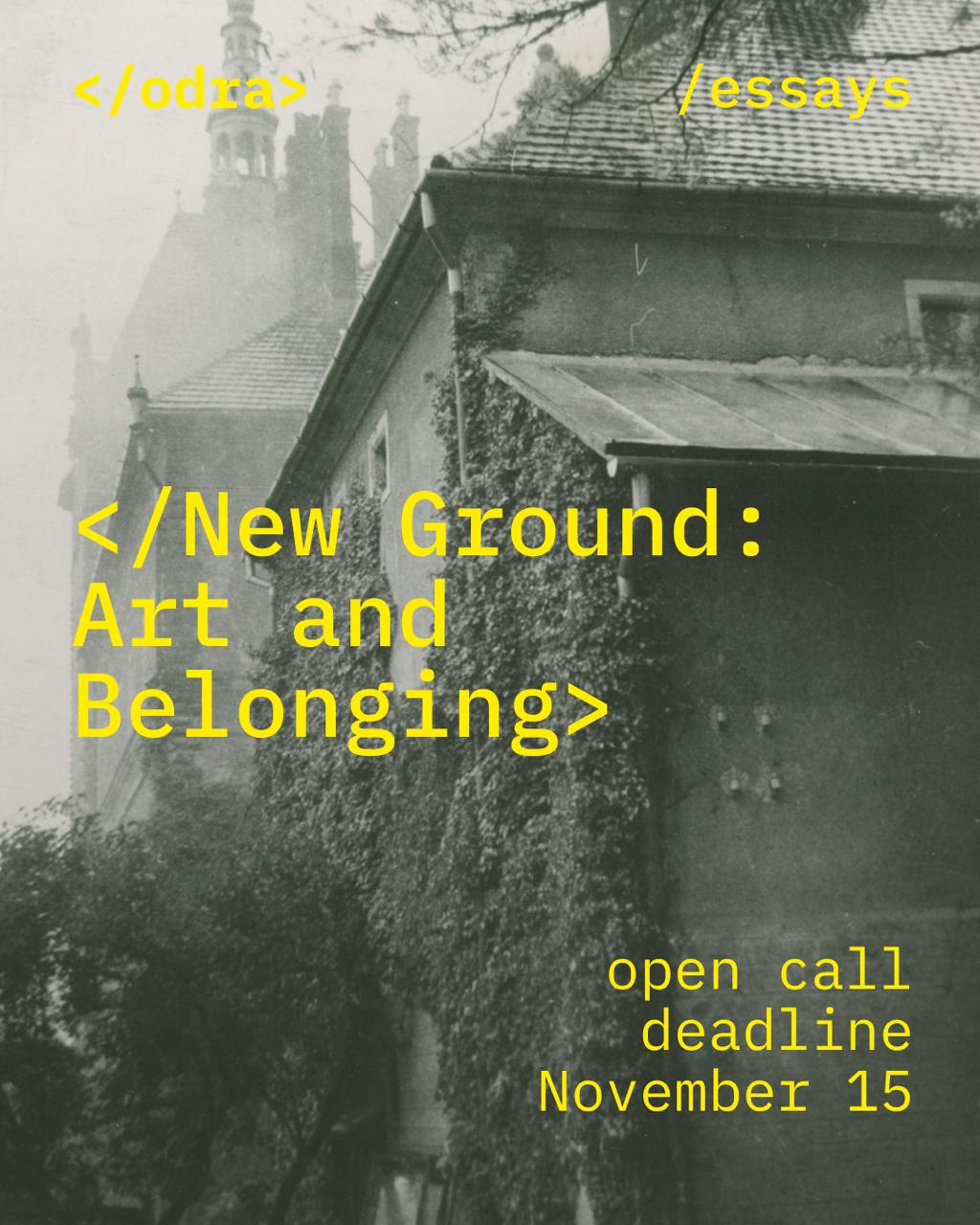
ODRA Platform, a non-profit magazine about contemporary art of Eastern Europe, Central Asia and the Caucasus, announces its third open call for the essays section titled New Ground: Art and Belonging. We invite contributions exploring how your creative practice and perception of the world have changed since you moved abroad. We want to hear your voice, whether you are an artist, a curator or a researcher.
</odra> is an open publishing platform for the Eastern European and Central Asian art community and beyond, offering a new outlook on the contemporary art of the countries often underrepresented by the mainstream.
Our mission is to help artists, curators, researchers, critics and all other members of the community to be heard and seen, and make it easier for them to integrate into the global art context.
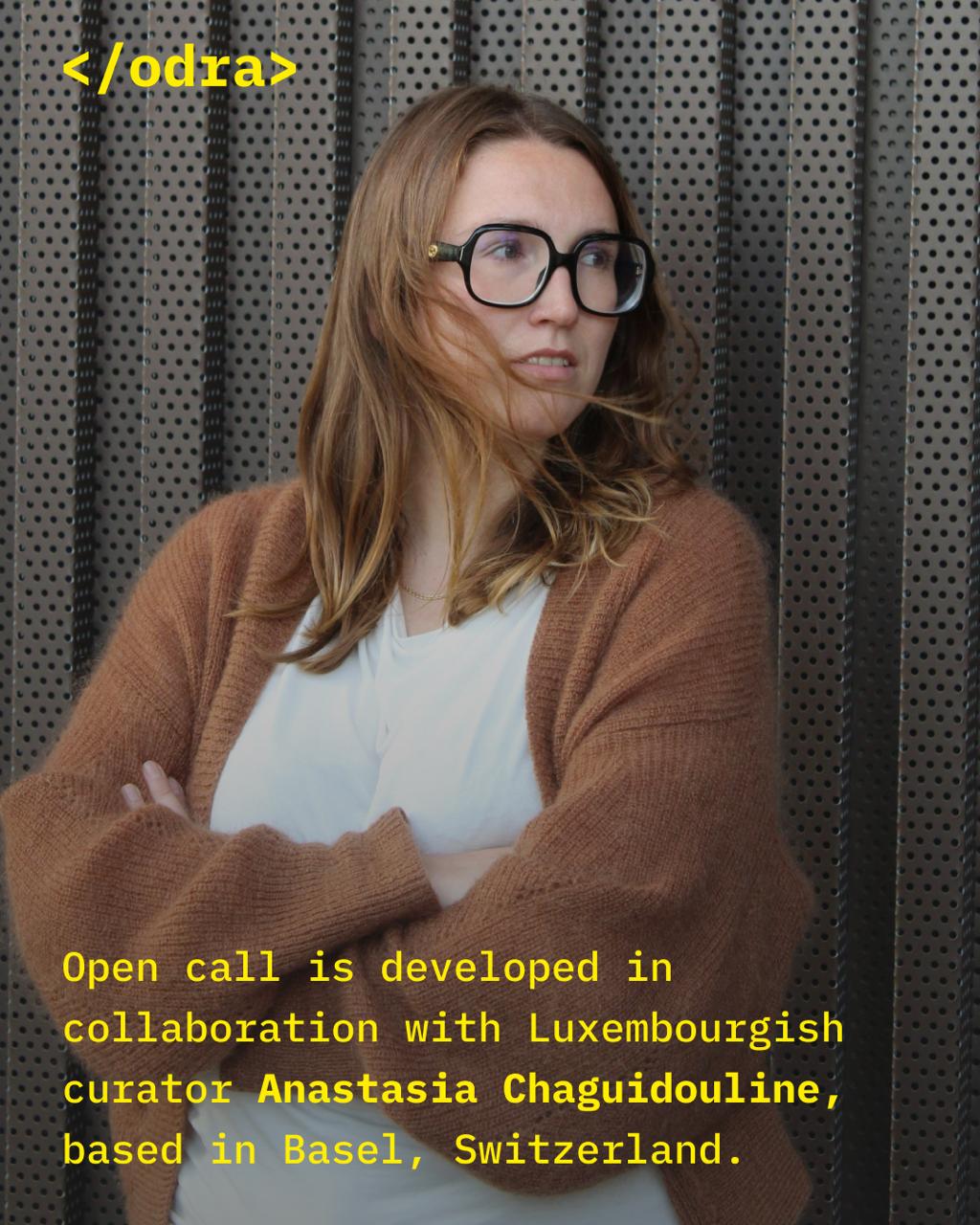
The new open call is developed in collaboration with Luxembourgish curator Anastasia Chaguidouline. Below is her vision for the topic of the open call:
"My interest in cultural inclusion and my work as an educator are significantly shaped by my own intercultural background.
As the child of political emigrants from the Soviet Union, I grew up in several European countries and know firsthand how varied—and at times difficult—access to culture can be for different communities.
Questions of belonging have always been a major focus for me; not least because I learned several languages in order to fit in.
This experience is a key motivation for my work: it has sharpened my understanding of how crucial it is to actively break down barriers and enable people from a wide variety of backgrounds to have genuine, natural access to culture.
The story of a journey, of alienation, of leaving, of migration is, above all, a very personal one.
The feeling of belonging cannot be forced, no matter how hard you try, no matter how many paths you take, no matter how many languages you learn, no matter how much effort you put into feeling the same way as the people around you.
Belonging is something inexplicable: it happens and then feels incredibly weightless, or perhaps it never happens at all. My mother has lived her entire life without that feeling.
Far away from her language, her home, her friends, and her family, she belongs to a world that doesn’t exist in her reality. My father says that he never belonged to where he came from.
Art, words, symbols, brushstrokes, moments, photographs are a deeply intimate way to grapple with feelings such as loss, belonging, alienation, pain, anger, grief, loneliness, friendship, hope, and love, and with everything else that accompanies the journey of migration.
It’s about coming to terms with oneself, one’s own path, and one’s own story against the backdrop of political uncertainty, and about documenting and sharing that story.
Because when shared, stories can create closeness and connection, new paths, and hope, exactly what we all so desperately need right now."
Questions you can raise in an essay:
- Have you blossomed creatively or was emigration and the related bureaucracy a big struggle that limited your flow?
- How do you feel in the circumstances of uncertainty?
- What role do creativity and work play in your life now? Has your attitude towards the art world changed in any way?
- Have you been able to find and set up your new studio? Where do you work now and how does this space influence you?
- What role does your community play for you now? Have you found new like-minded people, or managed to maintain old connections across the distance?
- Are you learning a new language? Has it started to shape your work or thinking, and if so, how?
- Does your work now speak to a different audience than before? Who do you imagine reading or seeing it?
- Has memory or nostalgia for the place you left become part of your practice?
- Has your sense of time or pace of working changed since the move? Do you work faster, slower, in different rhythms?
- Do you see this move as temporary or permanent?
- Do you experience loneliness or do you feel integrated into your new cultural environment, or still somewhere in between?Who can apply
We invite artists, writers, researchers, curators, critics, and arts journalists to submit pitches or completed texts. Submissions should take the form of essays of around 1,000 - 2,000 words. Longer texts might be considered if warranted by the depth of research.
We welcome both emerging and established voices.
How to apply
Send your material no later than November 15, 2026. Please include a short biography including your name, and professional background. Submissions are accepted in English only. If you wish, please also include visual materials with credits that you want to be featured in an essay.
Writing guidelines:
An essay should include a headline and lede. Your lede should be engaging and introduce readers to your story and hook them into wanting to read more.
Please note that we do not accept AI-generated texts. The story should be in your own voice, and even if you think it’s imperfect, we can help to polish it off and guide you in the right direction. Please do not hesitate to reach out if you want to discuss a better angle for your essay.
ODRA’s mission lies in spotlighting underrepresented artists and processes. In this regard, stories about uberfamous artists such as Marina Abramović or Yayoi Kusama would not be accepted.
Please note that we do not accept AI-generated texts. The story should be in your own voice, and even if you think it’s imperfect, we can help to polish it off and guide you in the right direction. Please do not hesitate to reach out if you want to discuss a better angle for your essay.
You must have an account to make a submission using CuratorSpace. It's free and only takes a few moments. Once registered you'll be able to keep track of all of your submissions and get updates on upcoming opportunities.
Already have an account? You'll need to log in to make a submission to this opportunity.
You must have an account to send a message to the curator of this opportunity. Registering only takes a few moments. Once registered you'll be able to keep track of all of your submissions and get updates on upcoming opportunities.
Already have an account? You must log in to send this curator a message.
Get the latest CuratorSpace news, updates about new opportunities, upcoming deadlines, and art-related promotions.
Art Horizons Magazine (ISSN: 3068-1103) invites artists, researchers, and writers worldwide to... Elemental
Dot Gallery are looking for artworks that celebrate the elements for their exhibition... BHM Benefit: Celebration of Community Creatives
OPEN CALL: CELEBRATING COMMUNITY CREATIVES Black History Month London | Art, Music, Culture &...