CuratorSpace Artist Bursary #30

Anna Li, Ziyan Liu, Alison Lowry, Dominika Jackowska

Anna Li
The Average Crip is a contemporary art project that critically examines the concept of the “average body” through disability, feminism, and visual culture. The project takes its starting point from Adolphe Quetelet’s 19th-century theory of the “Average Man,” which laid the foundations for statistical science while producing normative ideals of health, beauty, and productivity that continue to shape contemporary society. Using digital composites made from my oil paintings, watercolours, drawings, and photographs of my own disabled body, I construct fragmented, speculative bodily landscapes. These images are presented in illuminated lightboxes and viewed through suspended, hand-crocheted lace panels. The lace functions simultaneously as a material associated with care, labour, and exclusion, and as a conceptual grid referencing modernist aesthetics, medical measurement, and statistical norms. The work can only be visually “resolved” from a single viewpoint; from all other positions, the image fragments collapse. This spatial instability mirrors how disabled bodies are often forced to align with narrow standards in order to be legible or accepted. The installation creates an immersive, intimate encounter that questions who defines the norm and who is rendered invisible by it.


Ziyan Liu, Experimental Textiles for a Posthuman Ecology: let the textiles happenThis project sits between biomimicry and posthuman art and design, using textile practice as a way to critically examine how contemporary industrial systems produce textiles from an anti-colonial perspective. Informed by ideas from plant neurobiology, particularly its emphasis on decentralized sensing and response, the project moves away from the notion of a single, centralized system of control. From the perspective of a textile artist, it questions the Industry 4.0 model shaped by efficiency, standardization, and predictability, and explores how these frameworks continue to reinforce industrial and colonial forms of control over materials, labor, and knowledge. At the core of the project is my textile-making philosophy of “let the textiles happen.” Rather than imposing predetermined form or outcome, the work treats textiles as responsive, living systems that emerge through interaction. In practice, the project is led by environmentally responsible natural materials and developed through experimental knitting and machine training. By gradually loosening the artist’s control over outcomes, machines and materials are allowed to actively shape the making process. Imperfections and errors are embraced as part of creation rather than failure. Through this posthuman approach to textile practice, the work seeks to position textiles as active participants in making, capable of responding to material behavior, machine operation, and environmental conditions. The project examines how these interactions generate textile form, resulting in an experimental textile machine system and a series of textile sculptures co-produced by the artist and the machine. Together, these outcomes honor nature by treating textile art as a responsive, living process.

 Alison Lowry, 'Rewiring: Women, Menopause, and Transformation'
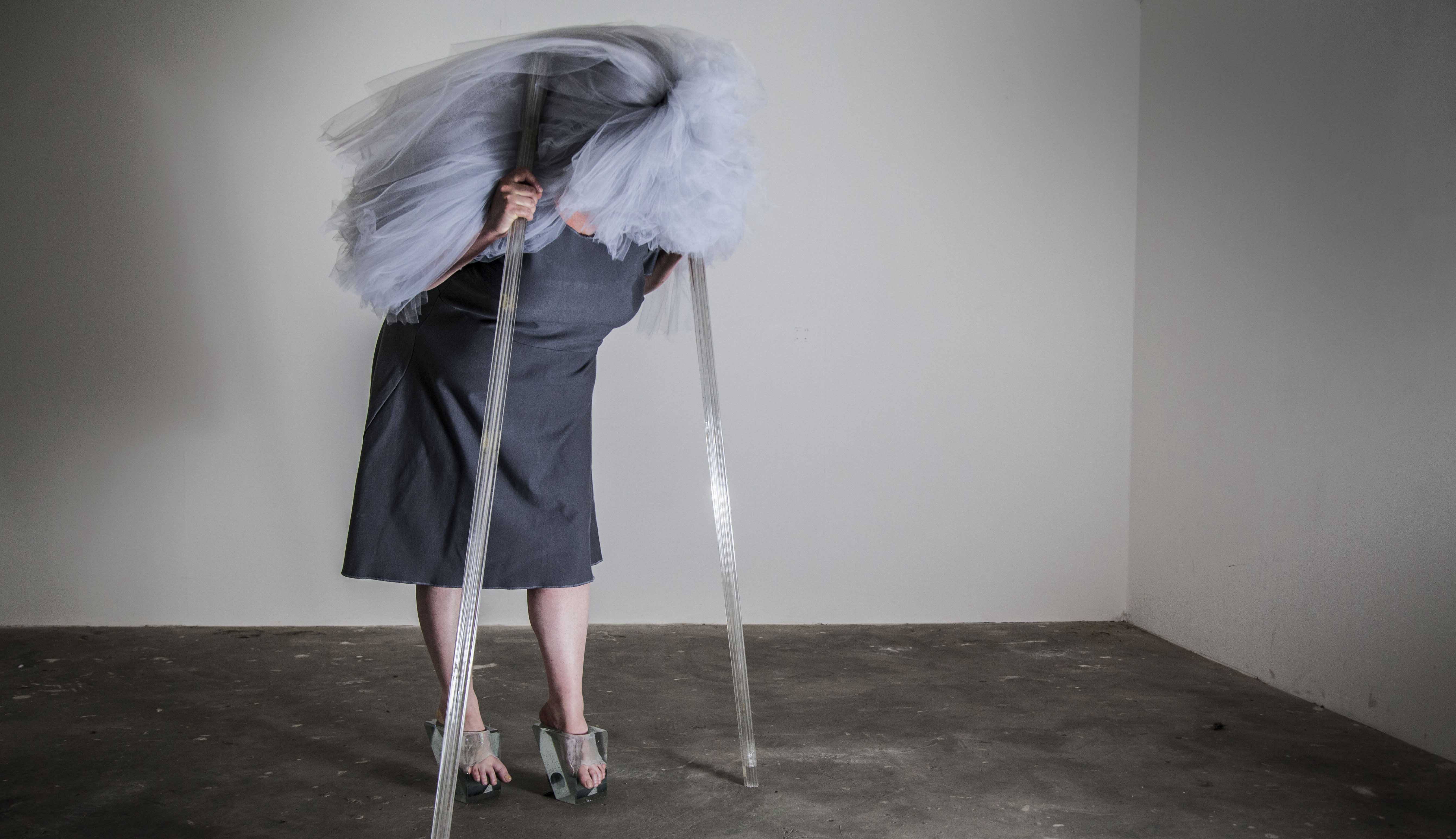
'Rewiring' is a multidisciplinary exhibition that examines women’s lived experiences of peri-menopause and menopause through photography, performance, and sculpture. Rooted in my own personal journey, the exhibition seeks to reframe cultural associations of menopause, exploring both its biological and emotional realities while challenging entrenched societal attitudes that have long silenced women at this transformative stage of life.
For generations, menopause was rarely spoken of, dismissed as something women should simply endure. Only recently has the subject received wider visibility in mainstream media, with documentaries and news features beginning to confront the scale of its physical, mental, and emotional impact. My own discovery of the psychological impact of peri-menopause came as a shock—how could something that may last up to ten years, reshaping both body and mind, be so under-discussed and researched?
I aim to situate menopause within a wider global and historical context. In Japan, for example, menopause is often understood as a stage of renewal and wisdom, rather than decline. Similarly, myth and folklore provide archetypes that suggest alternative framings. In Irish mythology, the Cailleach—an ancient goddess figure associated with winter—represents both decay and endurance, embodying the power of transformation. By drawing from these narratives, 'Rewiring' challenges the patriarchal disdain for older women and instead reimagines menopause as a potent stage of life: liberating, creative, and life-affirming.
The exhibition will consist of:
1. Collaborative Performance Video – Created with artist Jayne Cherry, this filmed performance piece will reimagine the myth of the Cailleach through the lens of contemporary women’s experiences of menopause. The performance will explore ritual, embodiment, and the interplay of age, myth, and identity.
2. Large-Scale Photographic Portraits – A series of portraits will address the physical and psychological “symptoms” of menopause. They will capture themes of invisibility, silence, and transformation, staging the body as both vulnerable and powerful.
3. Objects of Transition – Sculptural and found objects will evoke the hidden, material realities of menopause, from scientific understandings of the “rewiring” female brain to symbolic items representing loss, adaptation, and renewal.

Dominika Jackowska, Exploring Senses Through Tactile Sculpture

I plan to develop a larger sculptural installation at Edinburgh Sculpture Workshop that expands on my work, combining metal fabrication with interactive and sensory elements. Using steel and copper, I will create a single larger piece that explores tactile qualities and the potential to later integrate light or sound. This project will be a test case for scaling up my practice from smaller welded works into more ambitious forms suitable for public and festival contexts. Accessibility will remain central: I will collaborate with the NEUK Collective (a neurodivergent artist group) to test how the work feels in terms of texture, durability, and sensory experience. The bursary will directly support studio time at ESW and materials, enabling me to dedicate focused time and resources to building and refining this new work.My practice is distinctive in the way it fuses traditional craft processes with inclusive, multi-sensory design. I combine welding, casting, and fabrication with sound and light to create works that are not only visual but tactile, playful, and participatory. Unlike most gallery-based sculpture, my pieces are made to be touched and explored, opening up art to audiences who engage through sensory experience. Accessibility is built into the process: I test works with the NEUK Collective, ensuring they are safe, engaging, and inclusive for neurodivergent and disabled audiences. This co-creative approach grounds my work in lived experience, which is still uncommon in sculpture. By embedding interactivity and accessibility into robust, crafted forms, I aim to push beyond traditional boundaries and reimagine sculpture as a fully immersive encounter.


More news

Not another listings site

CuratorSpace isn't another listings website; it's a place where curators and organisers can use custom online forms to allow artists to apply to their opportunity. It also allows you to see and manage all submissions made to your opportunity on the website, and to contact contributors directly.

Register now and you can start making submissions and even create your first opportunity for free.