How to Crowdfund Your Project
With traditional funding routes increasingly constrained, filmmaker Dan Edelstyn shares a practical perspective on building ambitious projects outside conventional systems. Drawing on firsthand experience of taking independently crowdfunded films from idea to international platforms and nationwide screenings, he outlines why developing a direct relationship with your audience may be one of the most viable routes for artists working today.
The Gatekeepers Said No. We Made the Work Anyway.
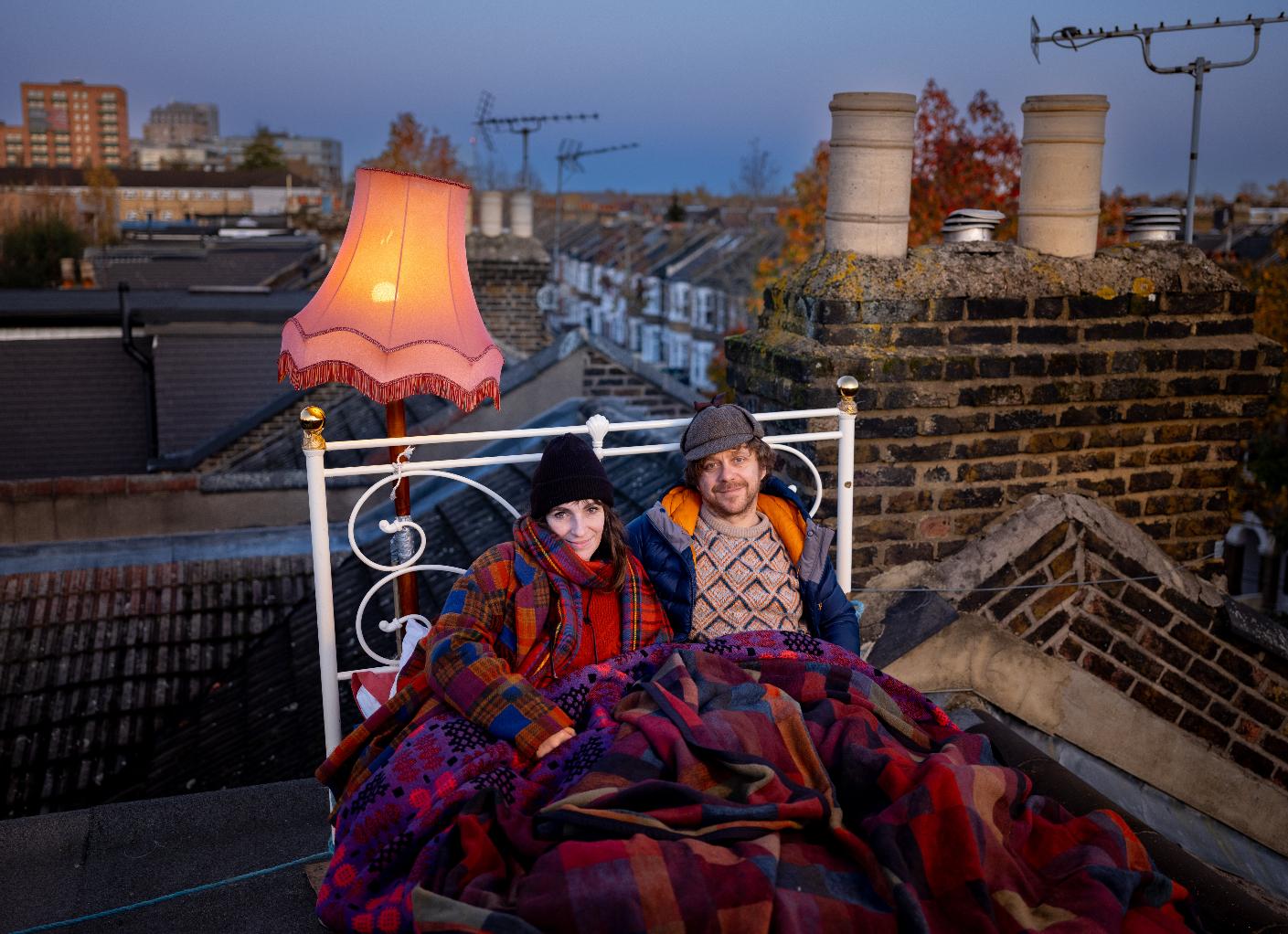
My partner Hilary Powell and I have made three feature documentaries together. All of them were rejected multiple times by every major public funder in the UK.
Our first film, How to Re-Establish a Vodka Empire, ended up on Netflix and Disney+. Our second, Bank Job, premiered at Hot Docs Toronto and got a theatrical release. Our third, Power Station, premiered at Sheffield DocFest last year and has since screened in over 120 UK cinemas, with requests from over 300 communities to host screenings.
None of them would exist if we'd waited for permission.
The funding landscape for artists is broken. We all know this. Budgets are shrinking, commissioners are risk-averse, and the work that gets made is increasingly the work that fits a narrow set of criteria. If your vision doesn't match what the gatekeepers are looking for this quarter, you're stuck.
But gatekeepers are not the only path.
Over the past five years, Hilary and I have crowdfunded over £500,000 for our projects — without a single pound from a traditional funder or broadcaster. We've used that money to make films, yes, but also to literally print money and abolish debt, to put solar panels on 30 houses, to take our work into schools and cinemas across the country.
The result? Our grassroots campaign helped pressure the government into committing over £1 billion to community solar. That leverage came from building a crowd, not from waiting for a commission.
Crowdfunding isn't just an alternative funding mechanism. It's a different relationship with your audience. Instead of making your work and hoping someone sees it, you're building a community who are invested — financially and emotionally — before you've started. They become your distribution network, your marketing team, your proof of concept for any future funding conversations. I think of it as the 3 I's: Impact, Income and Independence.
I've now written a book about this: 6 & 7 Figure Crowdfunding for Artists, Filmmakers and Purpose-Driven Entrepreneurs. (It obviously works for people just getting started too!) It covers everything we've learned — from building your email list months before launch, to crafting a campaign that actually converts, to the psychology of why people back projects (hint: it's not charity).
If you want to go deeper, I'm running a crowdfunding workshop on 26th Feb — link below.
And the following night, we're hosting a live screening of Power Station followed by a Q&A with economist and author Grace Blakeley, talking about building alternatives outside the broken system. It's a conversation about what happens when you stop waiting for permission.
The industry is tough right now. But the tools to go around the gatekeepers have never been more accessible. You don't need to wait for someone to say yes.
You just need a crowd who believes in what you're making.
— Dan Edelstyn Filmmaker | Author | Activist
Links:
My crowdfunding book
Live workshop - Thurs 26 Feb, 7pm
Power Station livestream with Grace Blakeley - 27 Feb, 7pm
Get the latest CuratorSpace news, updates about new opportunities, upcoming deadlines, and art-related promotions.
CuratorSpace isn't another listings website; it's a place where curators and organisers can use custom online forms to allow artists to apply to their opportunity. It also allows you to see and manage all submissions made to your opportunity on the website, and to contact contributors directly.
Register now and you can start making submissions and even create your first opportunity for free.