
Zheni Warner Norfolk, United Kingdom


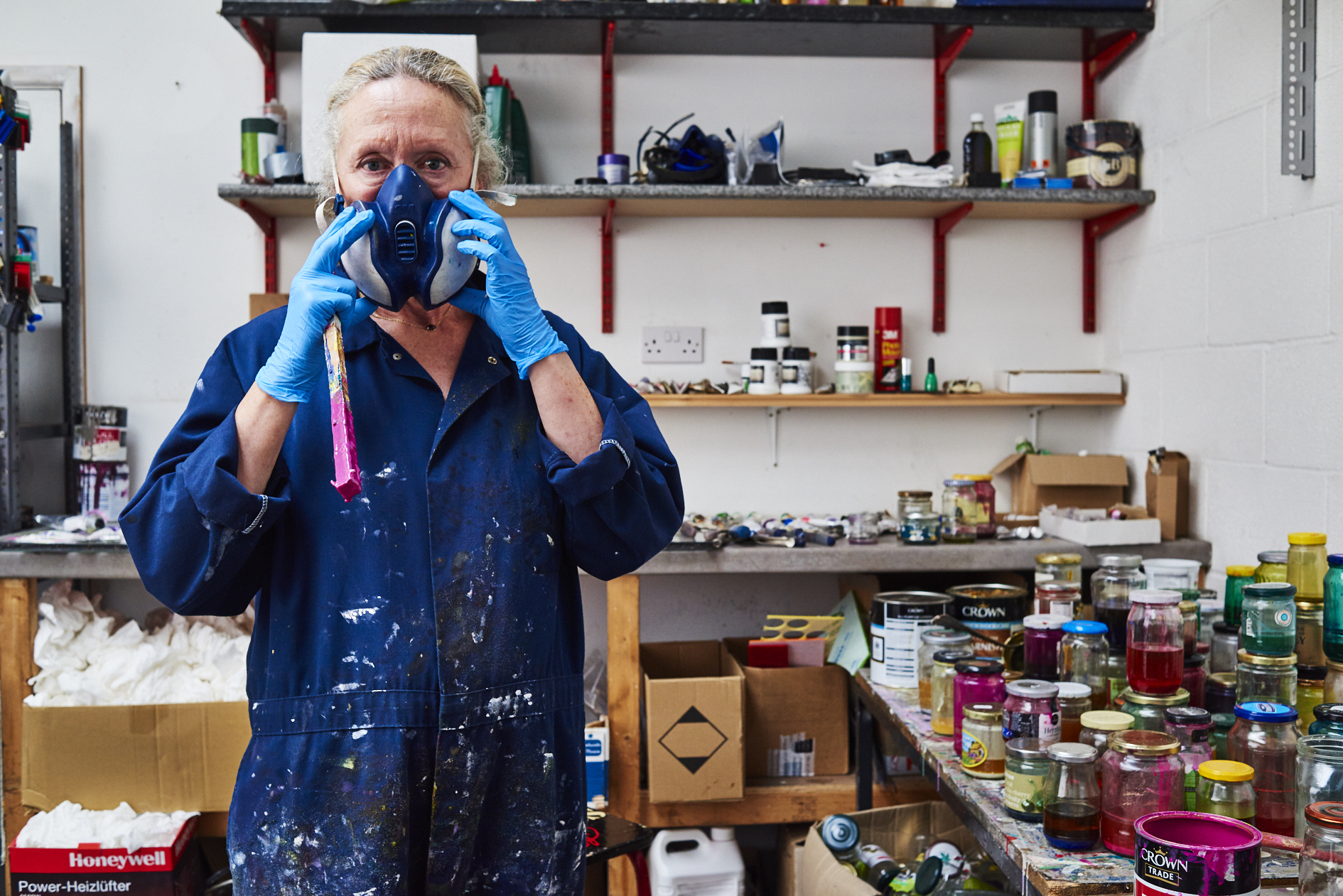
I am a painter who has moved into three dimensions. My painting is very classical in technique, using glazes to achieve tones and contrasts. The work is abstract in concept but in retrospect I find it grows out of my immediate and long term visual experiences.
This is from a magazine article on me: 1. Having moved from Bulgaria to the UK in the 1970s, how have different cultural contexts shaped your artistic language over time? At that time abstraction was taboo in Bulgaria. My mother got around it by painting minimal seascapes. I escaped into bright expressionism. Once in the UK, this morphed into a constructivist phase and then into an expressive but controlled abstraction. Which, in a strange way, is how I feel about the UK 2. Your paintings are often described in musical terms—“a concerto in colour,” “the rhythms of Bartók.” How do rhythm and movement inform your use of colour and form? How you view a painting is determined by how your eye moves across the surface. How it is constructed is determined by how the artist’s eye and hand move. Colour provides ‘punctuation’ in the process, giv,ing a clue towards further experiences and relationships. 3. Layering plays a central role in your work, creating transparency and depth. What does this process allow you to express emotionally or conceptually? Think of layering as being the different voices in the choir; layering introduces both range and subtlety. On a base level it is a part of the traditional craft of classical painting on which I was trained. Rubens, Rembrandt, Vermeer and Goya were outstanding singers in this particular choir. 4. Your recent works incorporate light boxes, neon, and illuminated wire. What drew you to light as a material, and how does illumination transform the meaning of a painting? I came across a visitor to one of my exhibitions who was trying to look behind the canvas, convinced there was some artificial light behind the paintwork. What a good idea! The illumination produces a second light source to complement the exterior light source from in front. These change the colour and the SORT of colour, in the same way that the colours on a photograph are different to those from a computer screen. 5. You’ve spoken about your works becoming ‘a second painting’ once illuminated. How do you think about the viewer’s physical presence and movement in relation to light and surface? Colour does not exist in an object, it is the product of a light source and the qualities of the material subject. No light source, no colour. As the viewer’s eye moves across the surface and the person casts a material shadow on it the relationship changes. Think of your perception of how a person’s beauty changes in bright light and a heavy penumbra. The electricity in the painting transforms the response to a more energetic level; without it, the painting gently hums. 6. The contrast between your luminous works and the darker Disasters of War series is striking. What prompted this shift in palette and atmosphere? Reality. I looked at photographs of a vibrant pre-war Gaza and then at the piles of rubble which are there today. How can you be anything but dark? 7. Goya’s Disasters of War is a powerful historical reference. How did you translate that legacy into a contemporary visual language? I started with rubble, or rather offcuts from various mechanical processes. A friend works for a company which had been constructing cribs for premature babies and had some left over offcuts. I saw footage of a ruined hospital where the children’s ward had been destroyed. Goya didn’t paint war as such, but the effects it had on people. In my small way I tried to do the same, using strips of canvas as bloodied bandages, plastic with holes in as windowless buildings. That is a post-hoc rationalization, not what I was consciously thinking at the time. 8. You state that beauty lies not in the subject but in what the artist brings to it. How do you reconcile this belief when working with traumatic or violent themes? Journalism is about presenting facts neutrally and in an unimpassioned way (or at least it should be.) What I want to show is how one FEELS. 9. Your work has been exhibited in cathedrals, galleries, and international contexts. How does the exhibition space influence the way your work is perceived or experienced? I have no idea! A public space is different to a private one. Once in a private space the painting becomes a member of the family. A loved one, I hope! 10. In a world marked by ongoing conflict and injustice, what role do you believe artists can—or must—play, even when direct action feels limited? Whatever you can. Put everything you can into your work, it’s not there just to ‘decorate fashionable apartments.’ (Picasso.)
Artwork
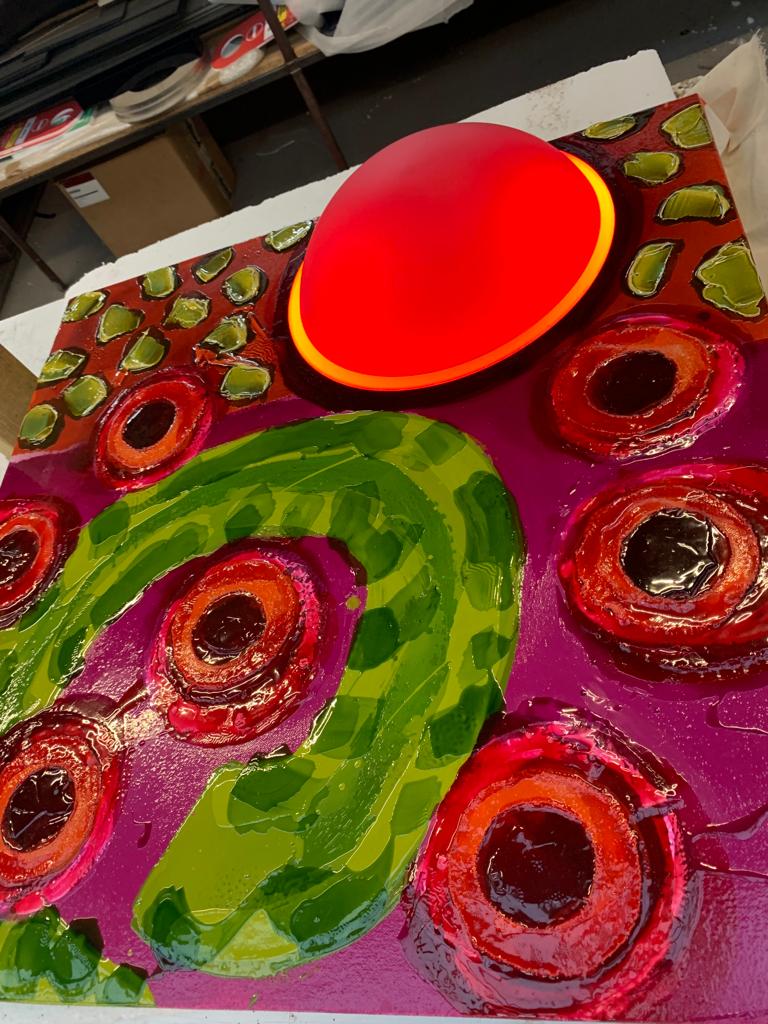
Mustique, oils with light box and plexiglass dome, 2021, 12000
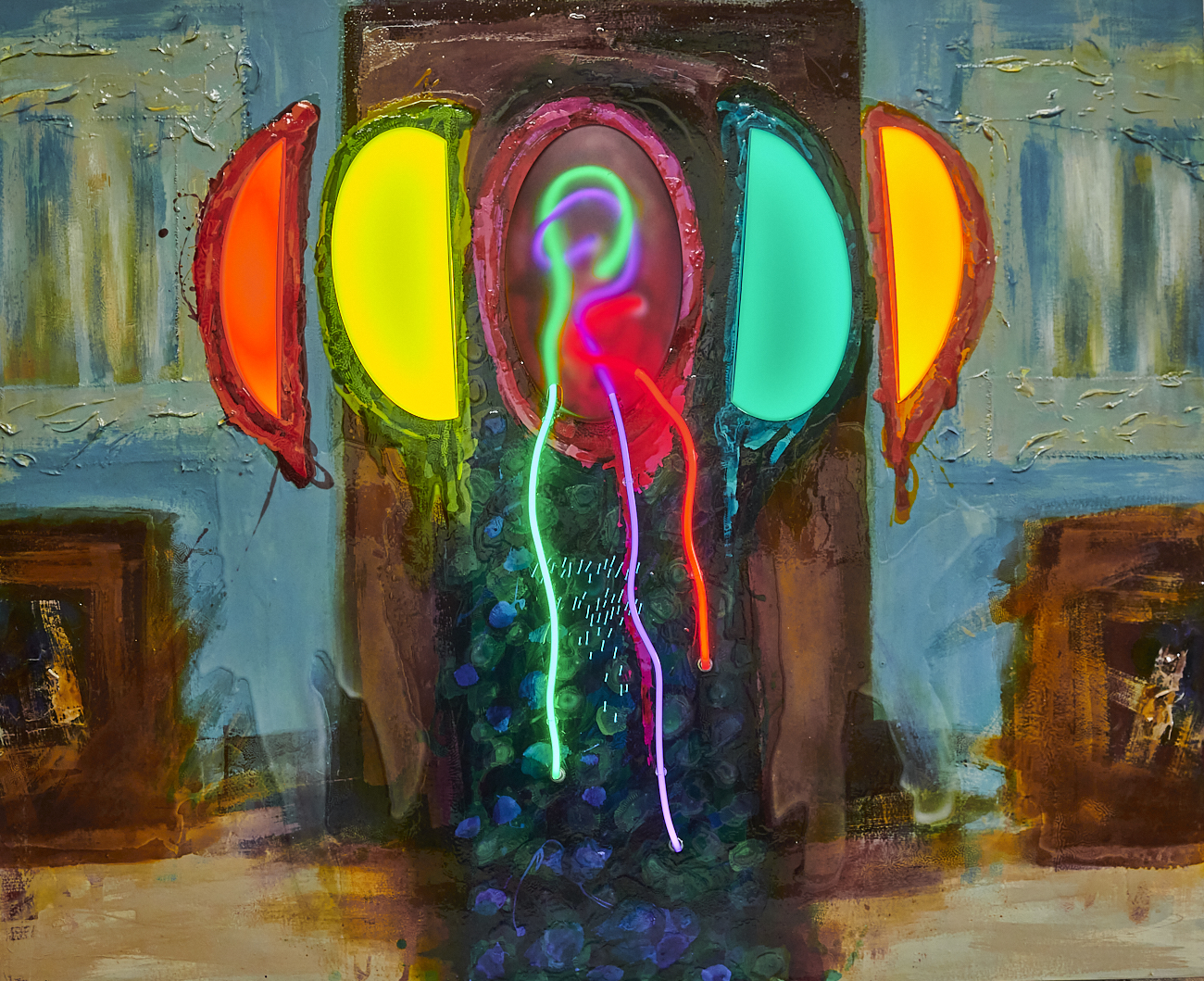
Princess Margaret, oils, perspex, illuminated wire, neon, light box, 2021, £150000