
Michael Paramore Montgomeryshire, United Kingdom


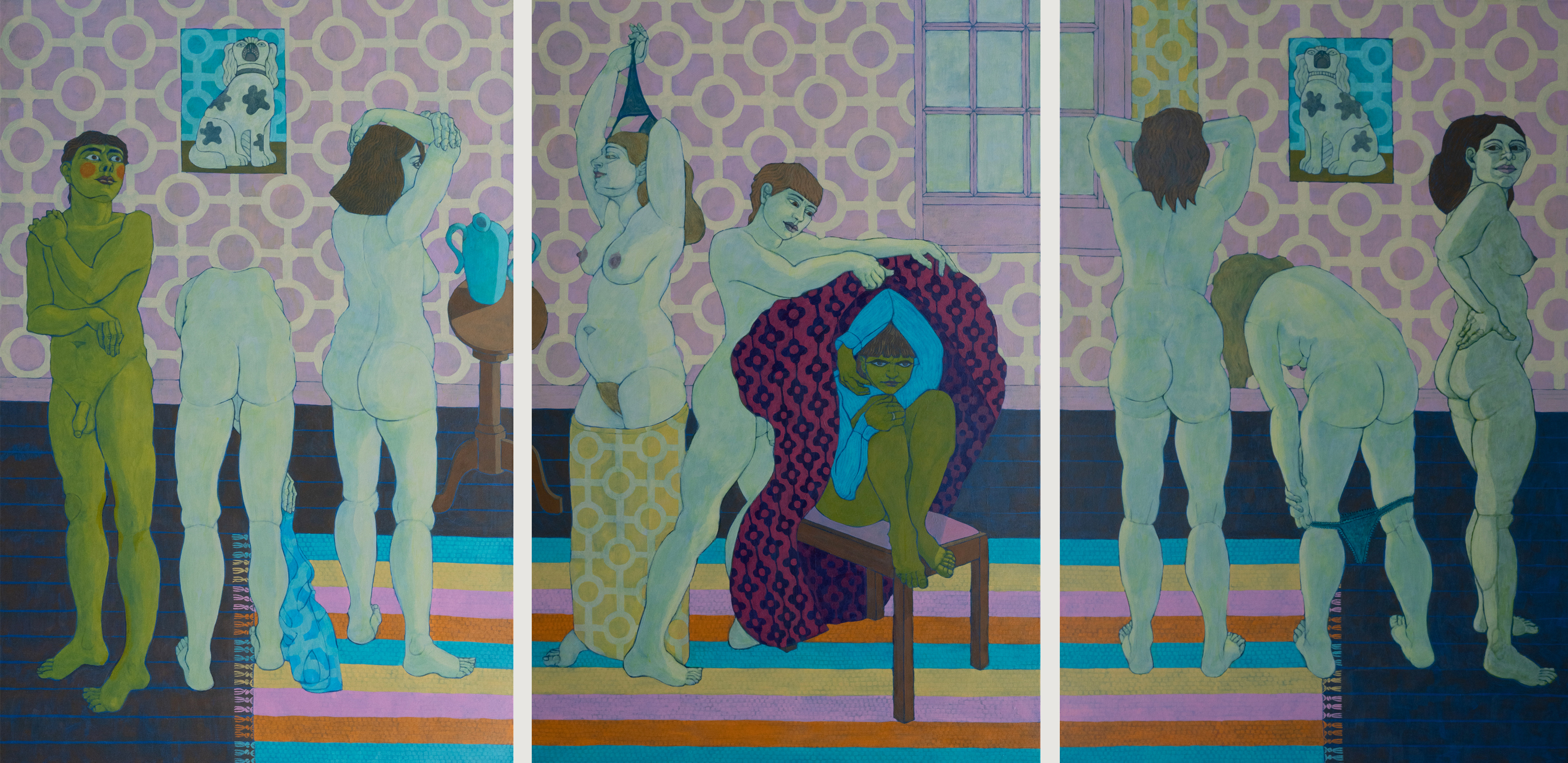
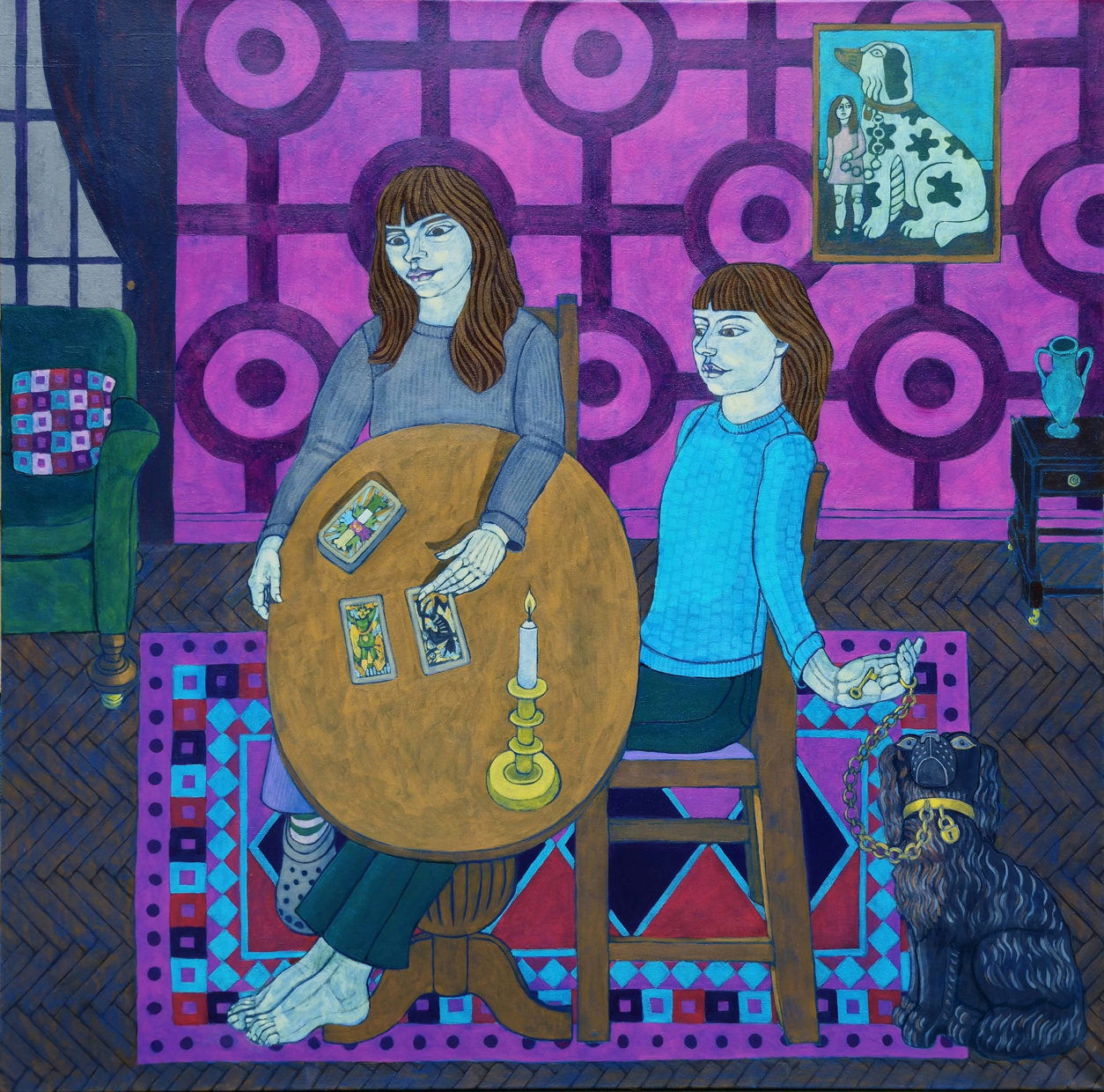
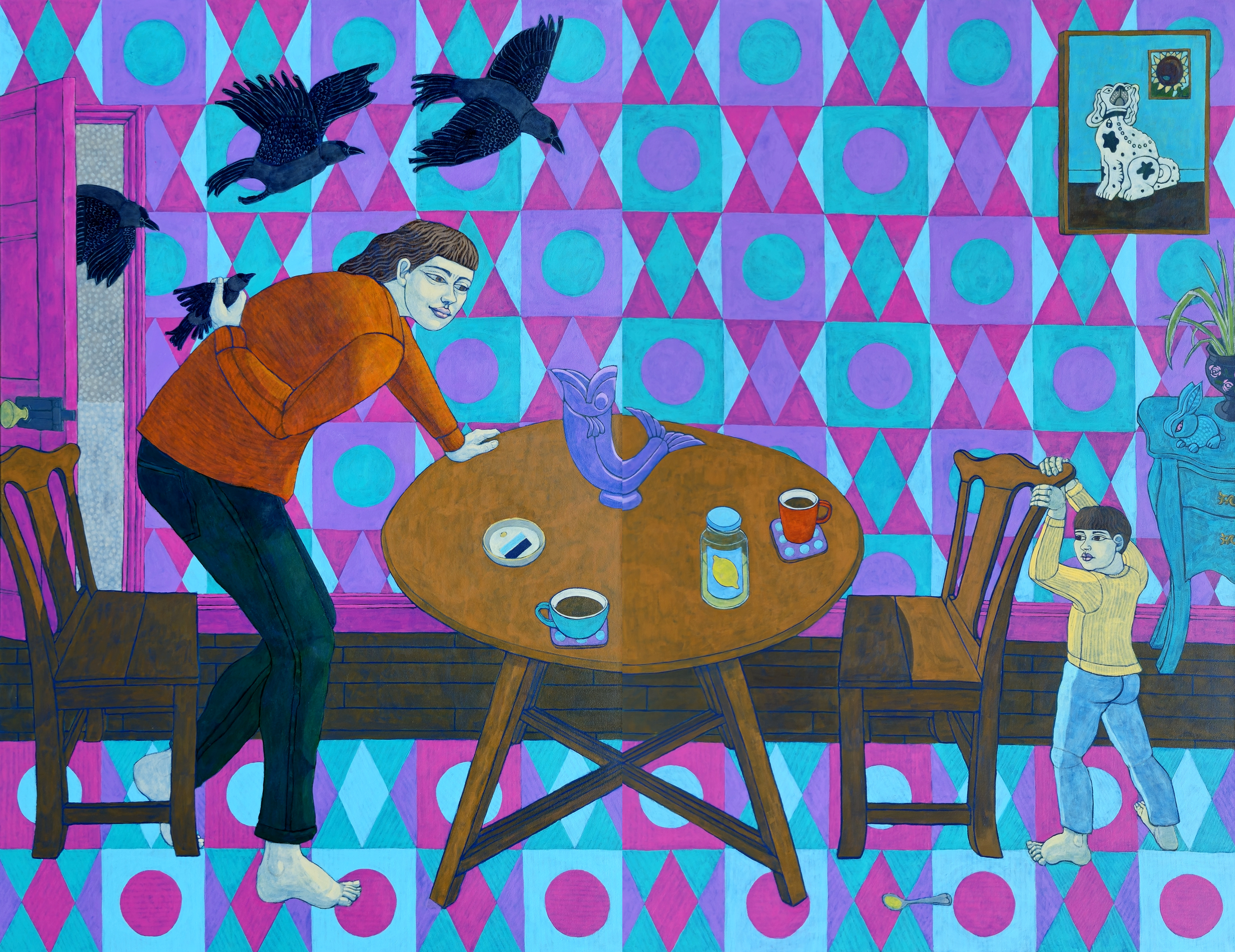
In group shows I want my work to feel like someone has placed an overly kitsch and whimsical Duccio in a room full of 18th century British landscapes — as if a figure has escaped from a fresco on a church wall in Siena and is wreaking havoc.
The pallid creatures with red cheeks and beatific glares inhabit rooms that feel completely sealed — like the inside of a dolls house, totally enclosed, airless, as though nothing of the world exists beyond the walls. No sky through the windows. No street outside. A world contracted to these four walls and the patterns on them, and that contraction is where the psychological pressure comes from.
The work sits at the collision point between two worlds that rarely meet: the heightened domestic drama of Mike Leigh's Abigail's Party and the raw, unadorned working-class realism of Ken Loach's Kes — held together by dominating pattern, clothing from vintage knitwear catalogues and the flat, luminous palette of Sienese painting.
The paintings work through a layering of cultural cyphers — kitsch, religion, pattern, domestic interiors, social relations — each one familiar, each one slightly wrong. Pattern and home decoration are not nostalgic indulgence but the work's active engine: the language through which psychological and social meaning is carried. Drama and loud wallpaper collides with childhood fears, abusive, strange and overbearing relationships, and trauma — where innocence manifests in plastic ornaments and pot dogs and the danger lies behind every calm half smile.
The figures are like actors on a stage, entering the room to play a part. Like the stock characters of Commedia dell'Arte transplanted into a northern interior, they are both entirely familiar and completely out of place.
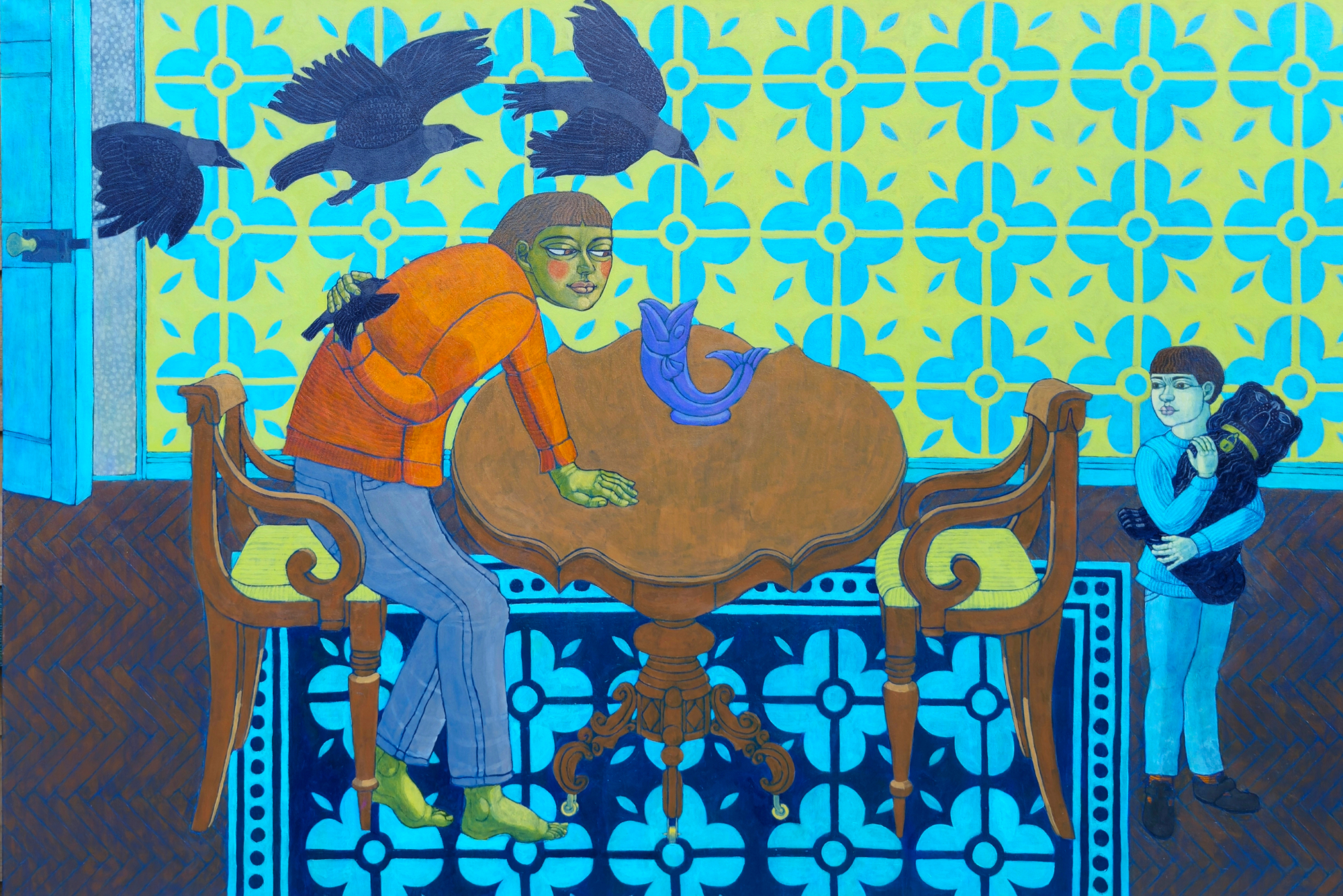
Artwork
Like the shy one at some orgy, Acrylic on canvas`, 2026
Just very aware of the size of it all, Acrylic on canvas`, 2025
The Fear of Lemon Cheese, Acrylic on canvas`, 2025
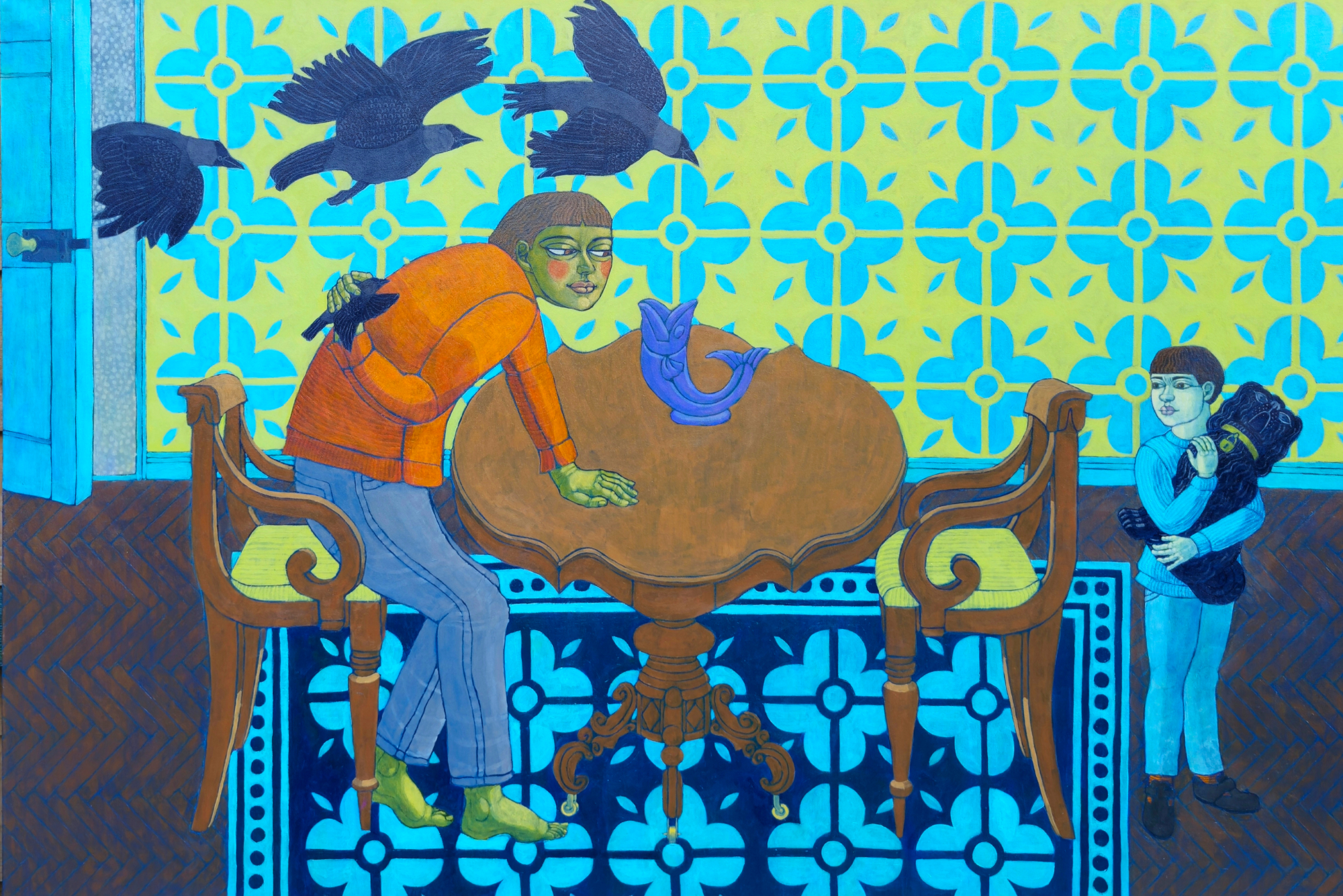
The Fear, Acrylic on canvas`, 2025
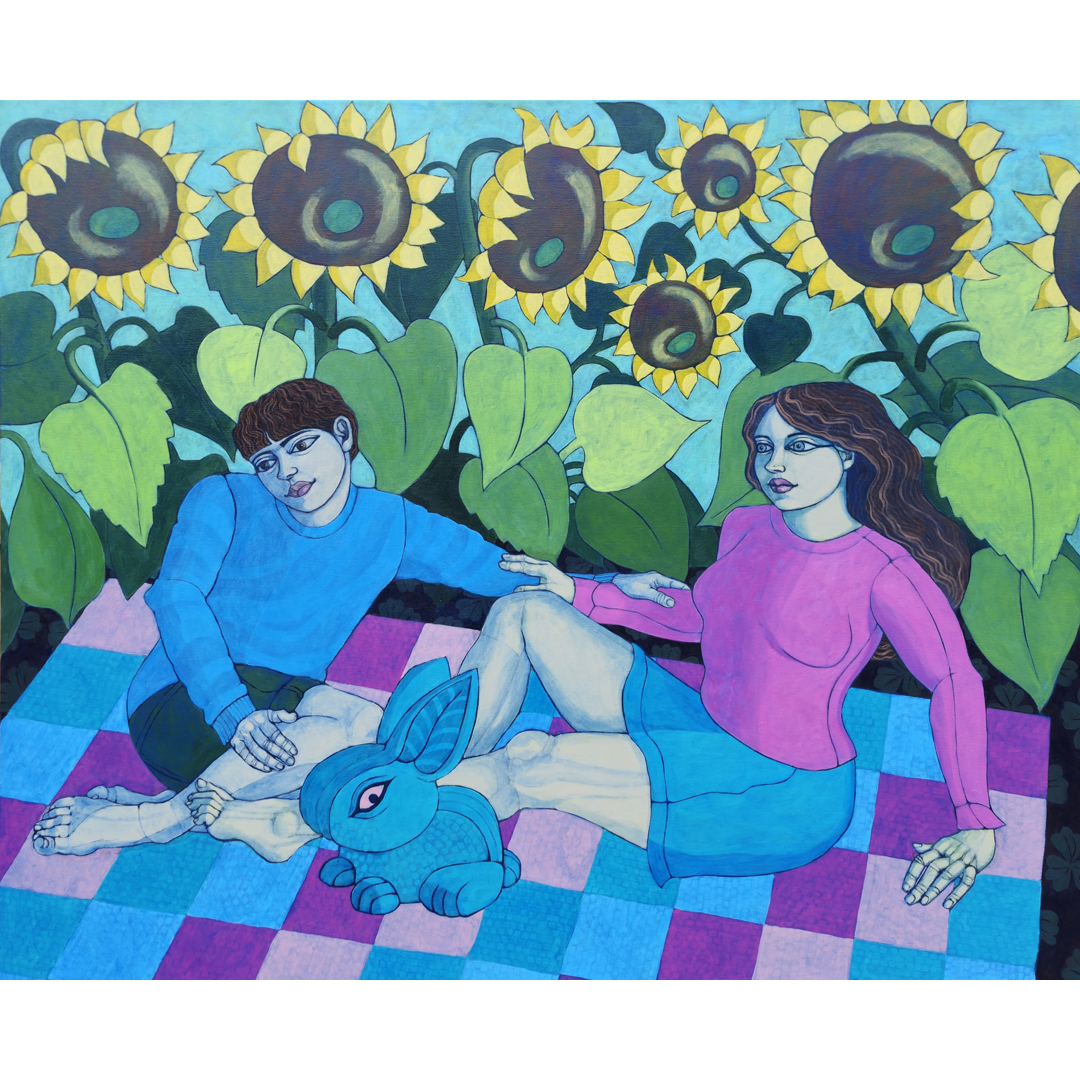
In dreams, Acrylic on canvas, 2024
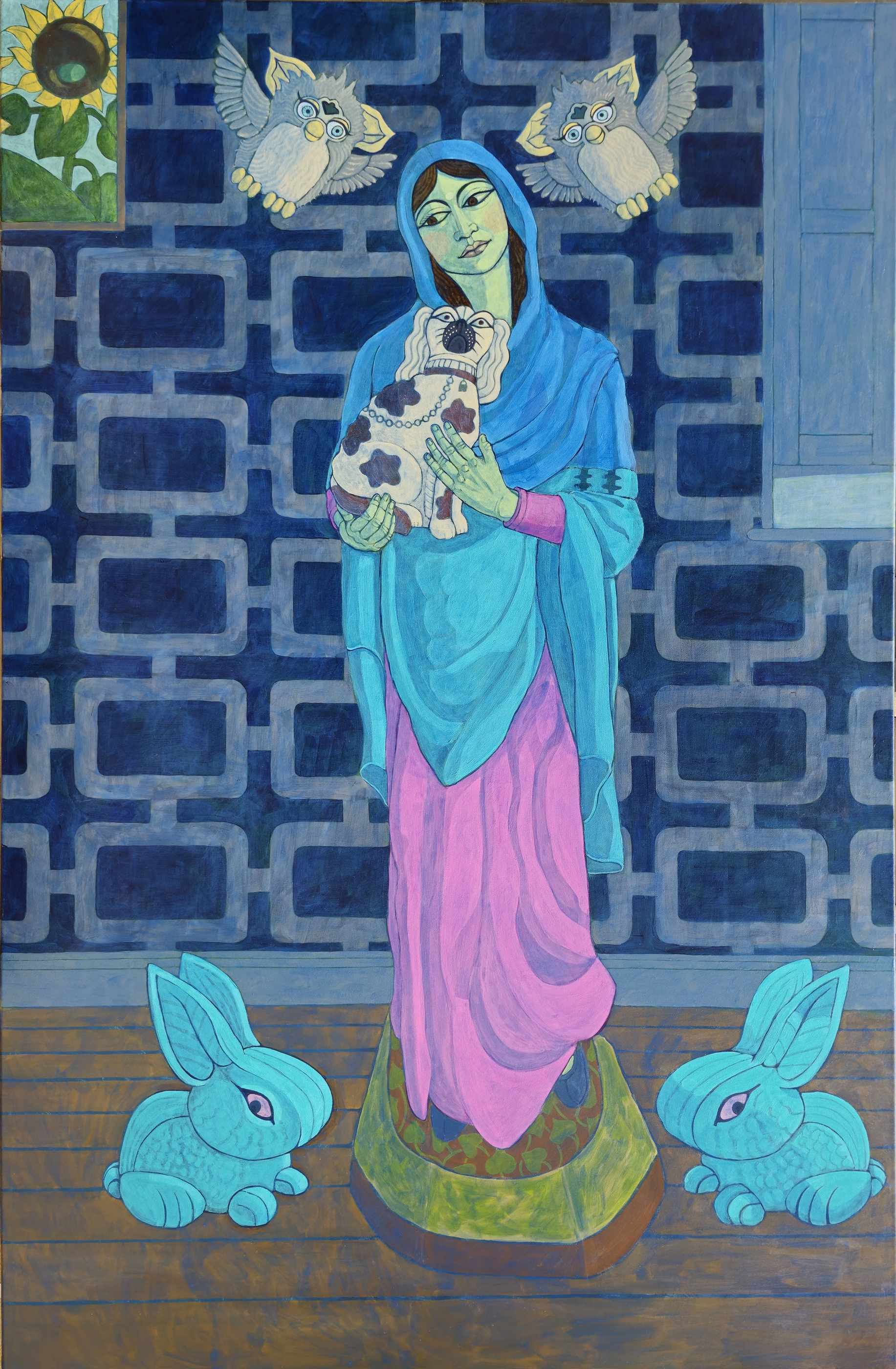
Death of the Wicker Madonna (Right hand panel), Acrylic on canvas, 2024
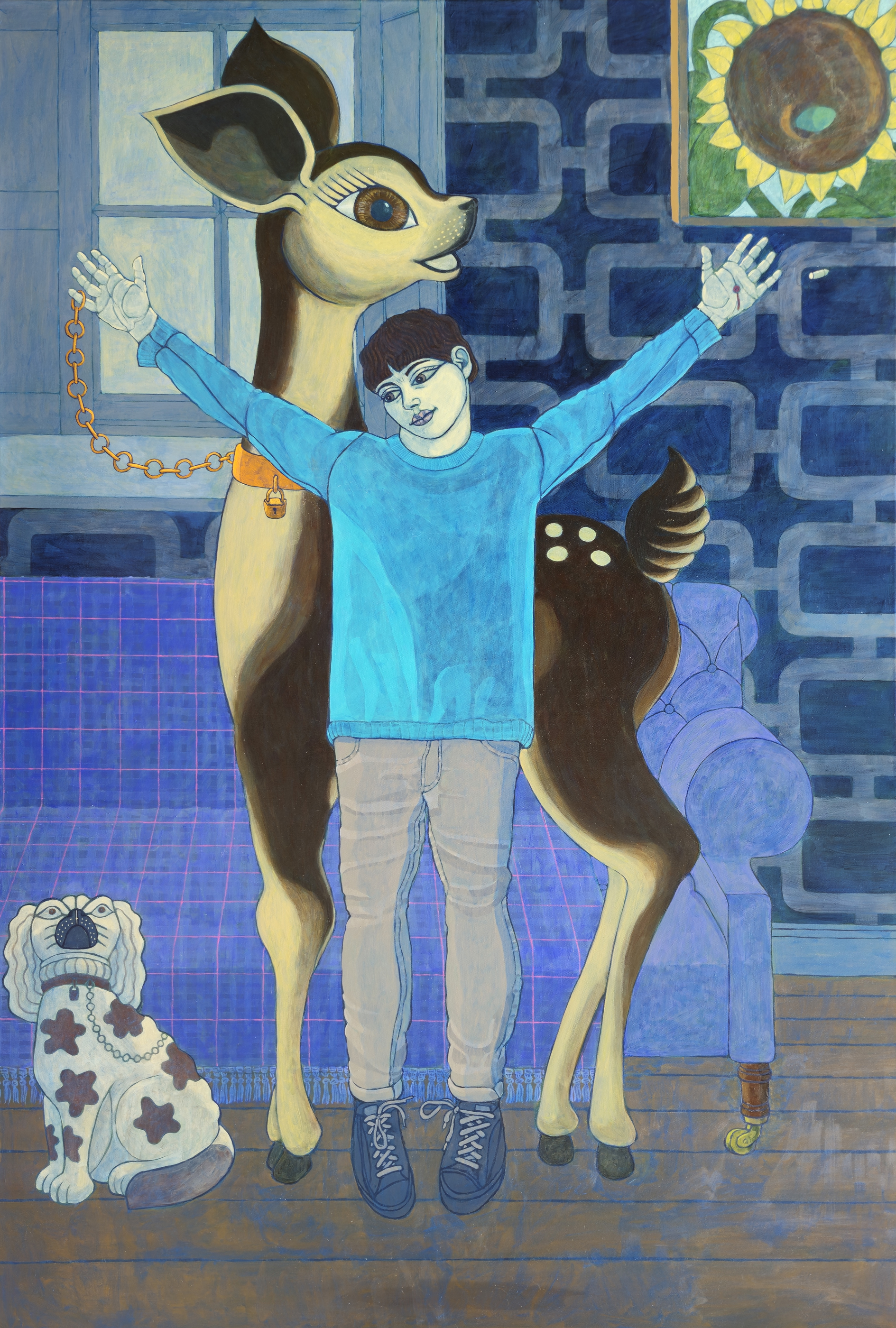
Death of the Wicker Madonna (Central panel), Acrylic on canvas, 2024
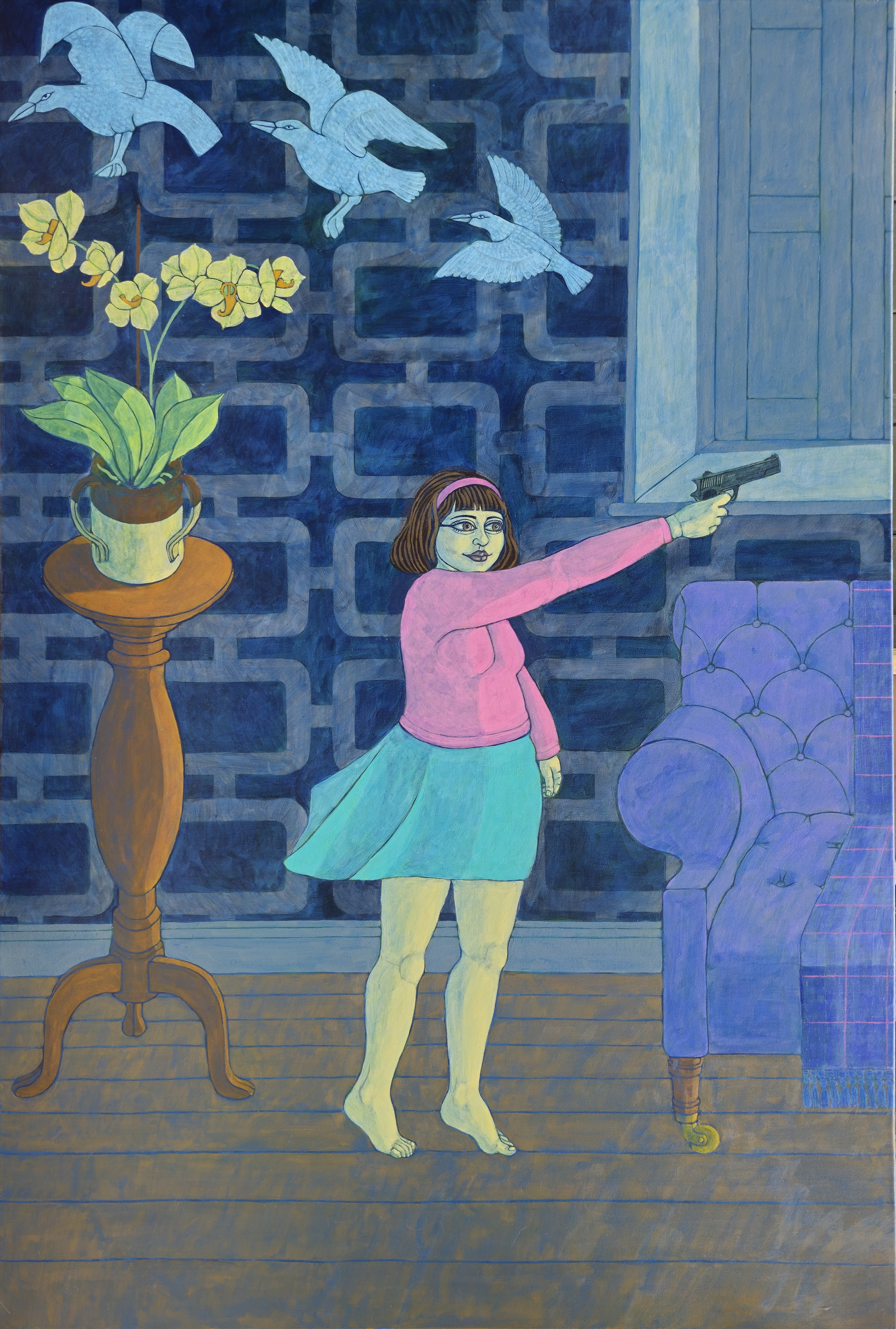
Death of the Wicker Madonna (Left hand panel), Acrylic on canvas, 2024
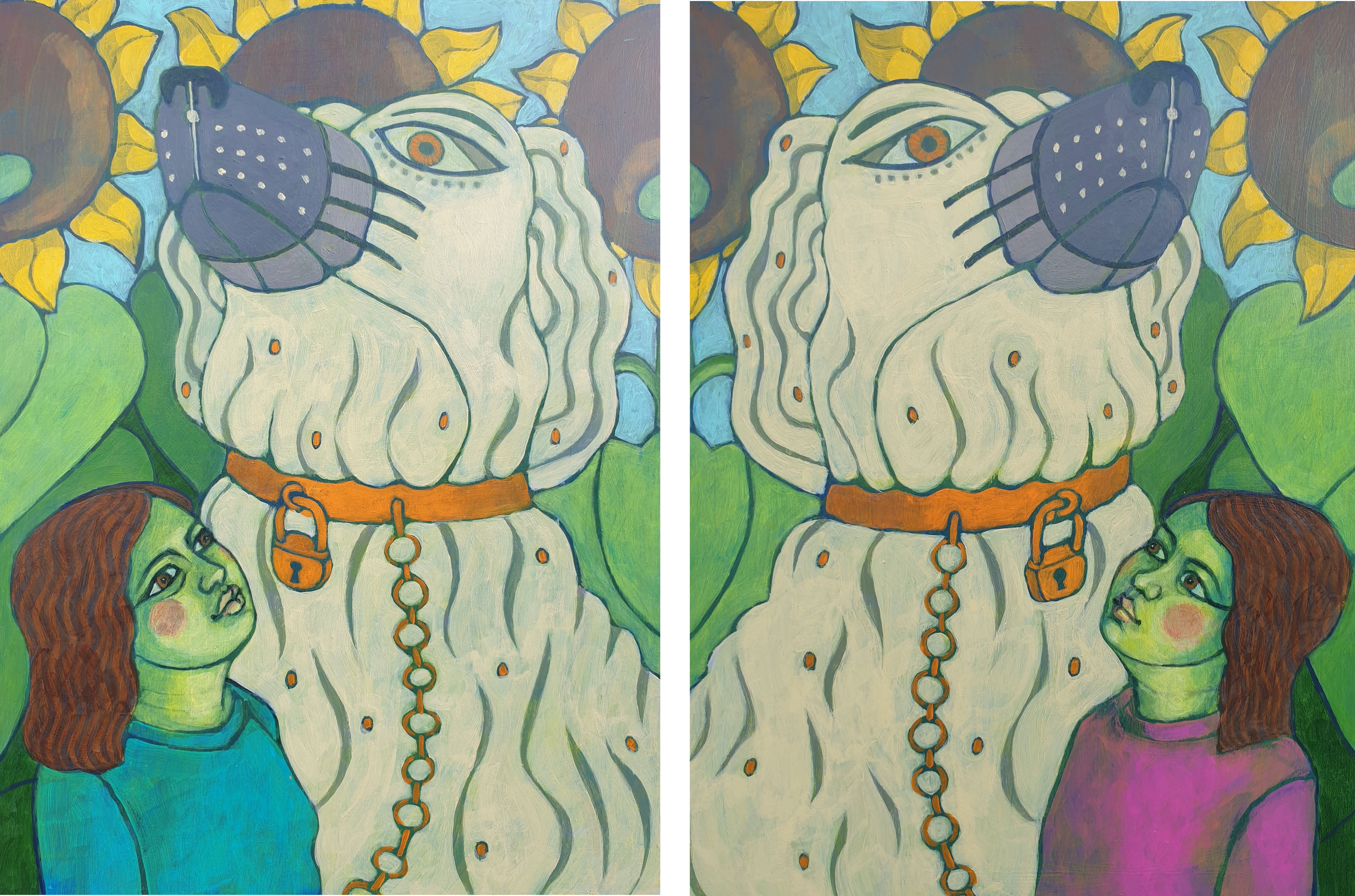
Study for paintings on wall of new work, Acrylic on board, 2024
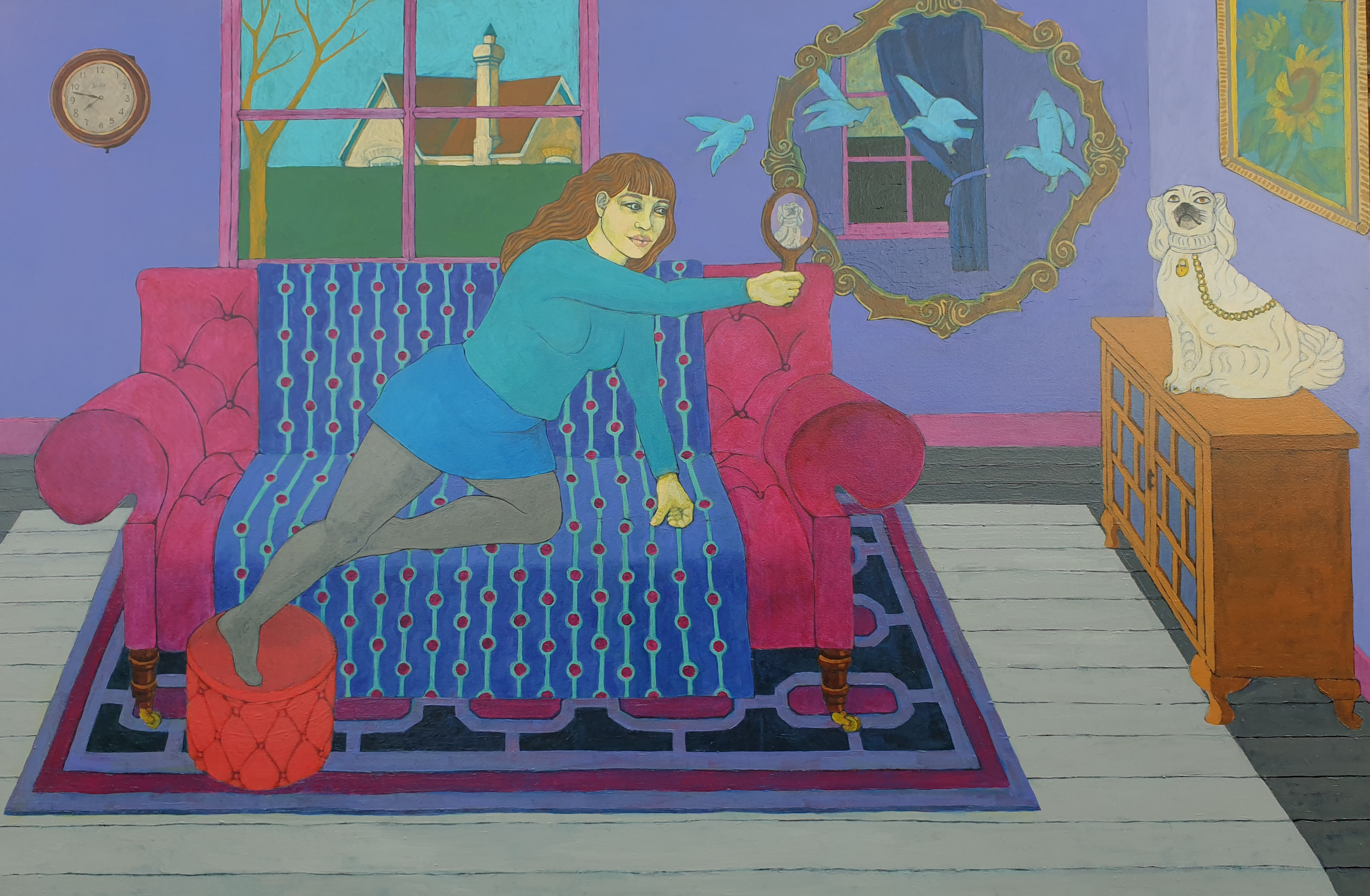
Proof of the existence of dog, Acrylic on canvas, 2022-24
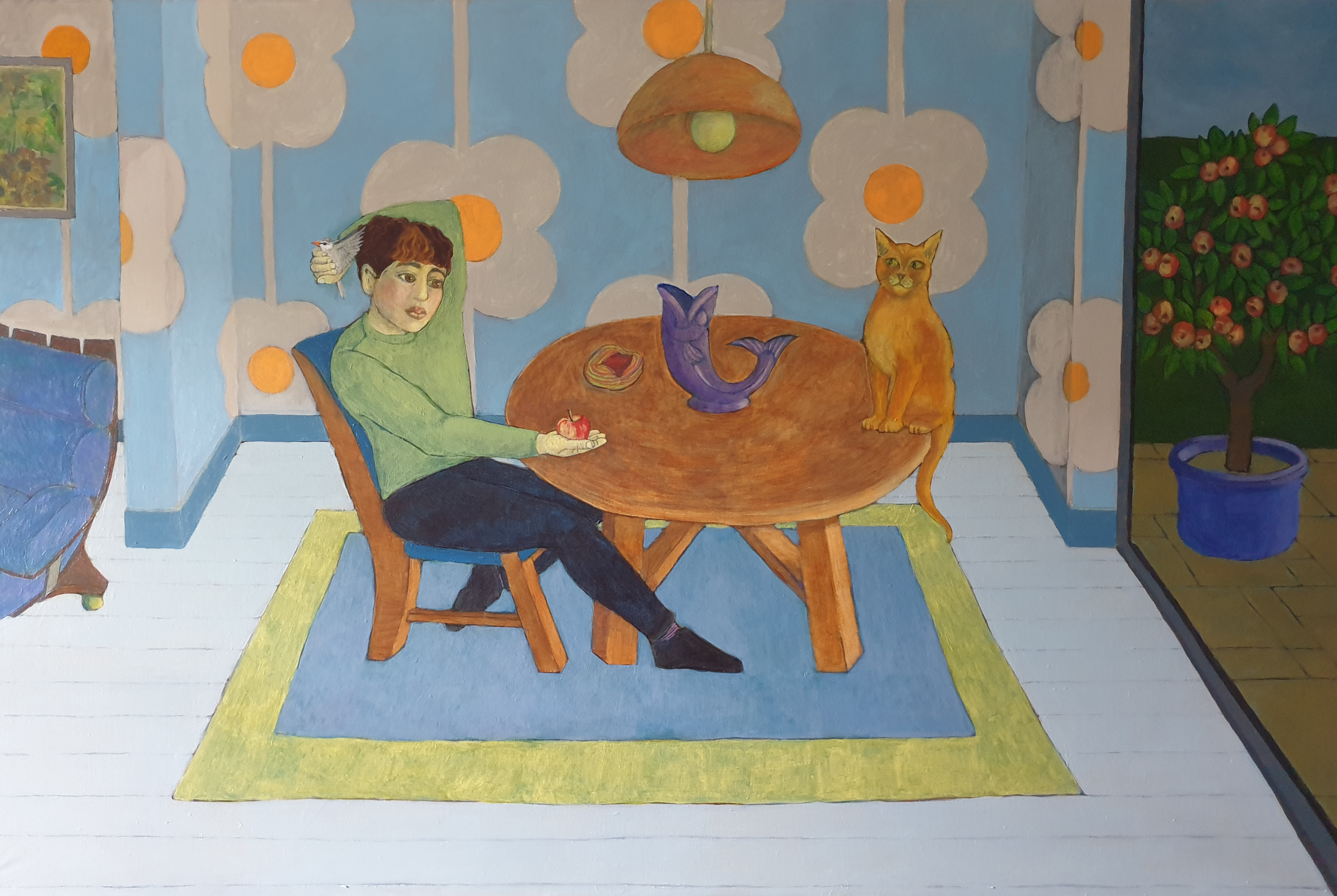
The Politician, Acrylic on Canvas, 2022
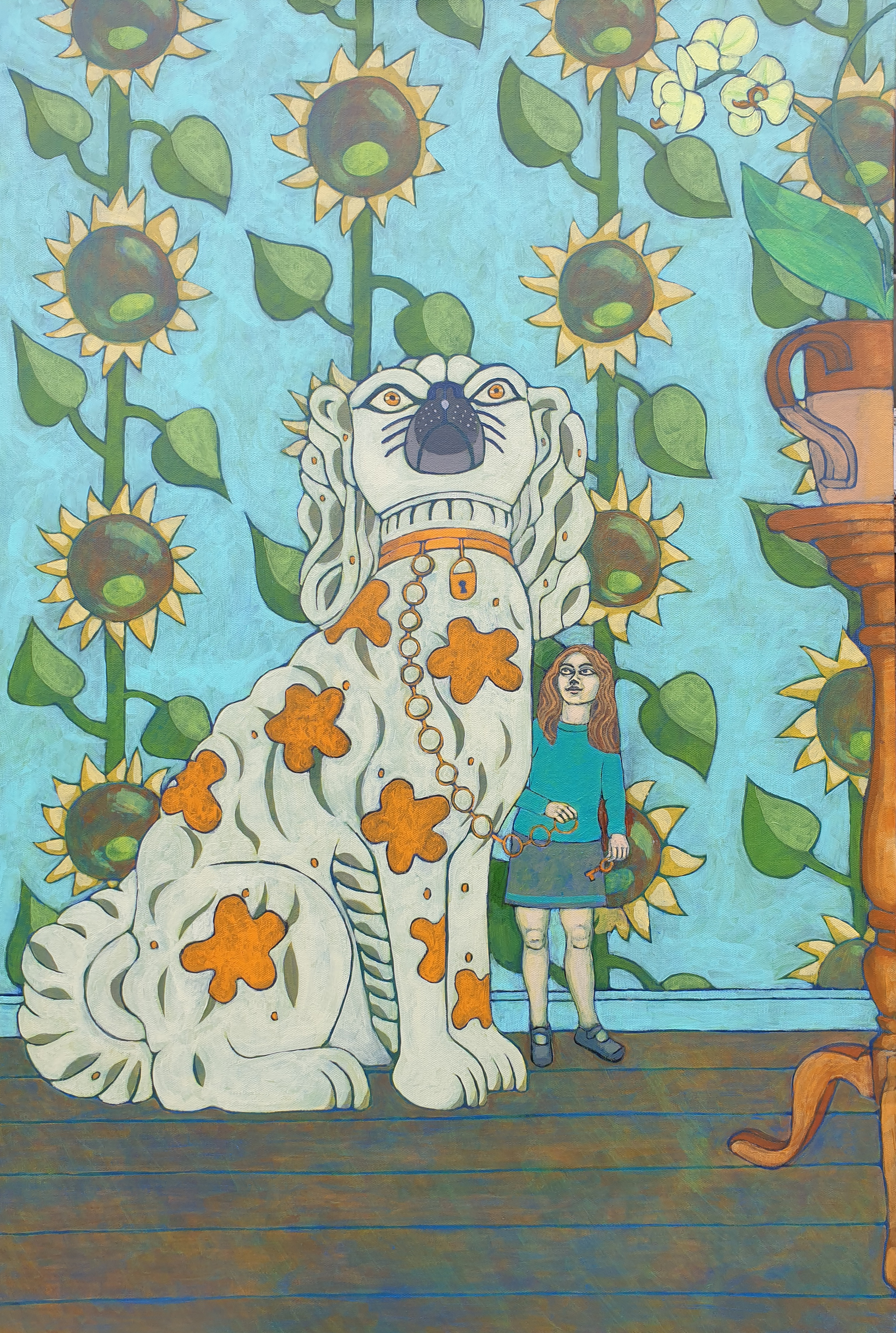
And Then It's OK, Acrylic on Canvas, 2023
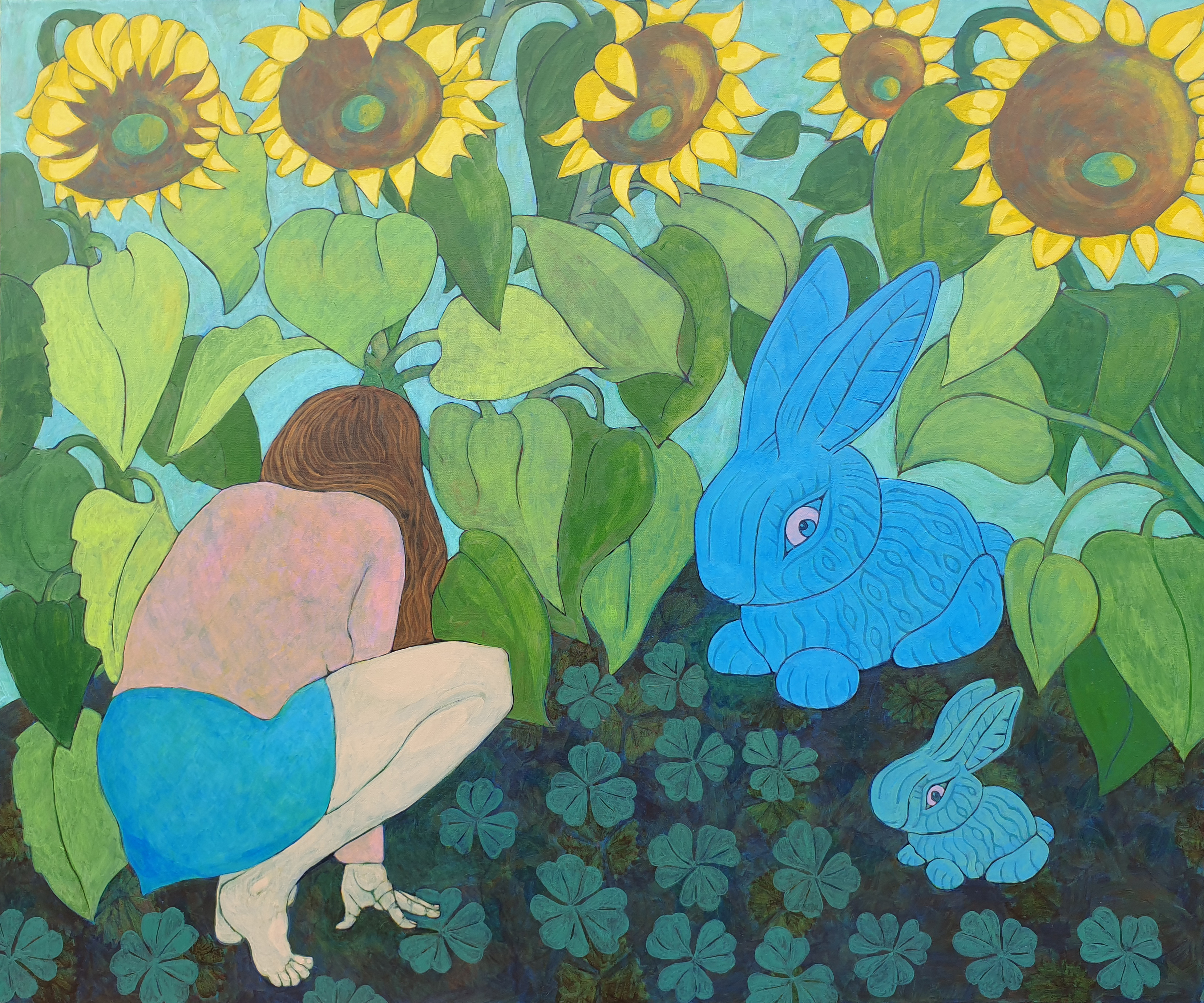
Adventures Close To Home, Acrylic on Canvas, 2023
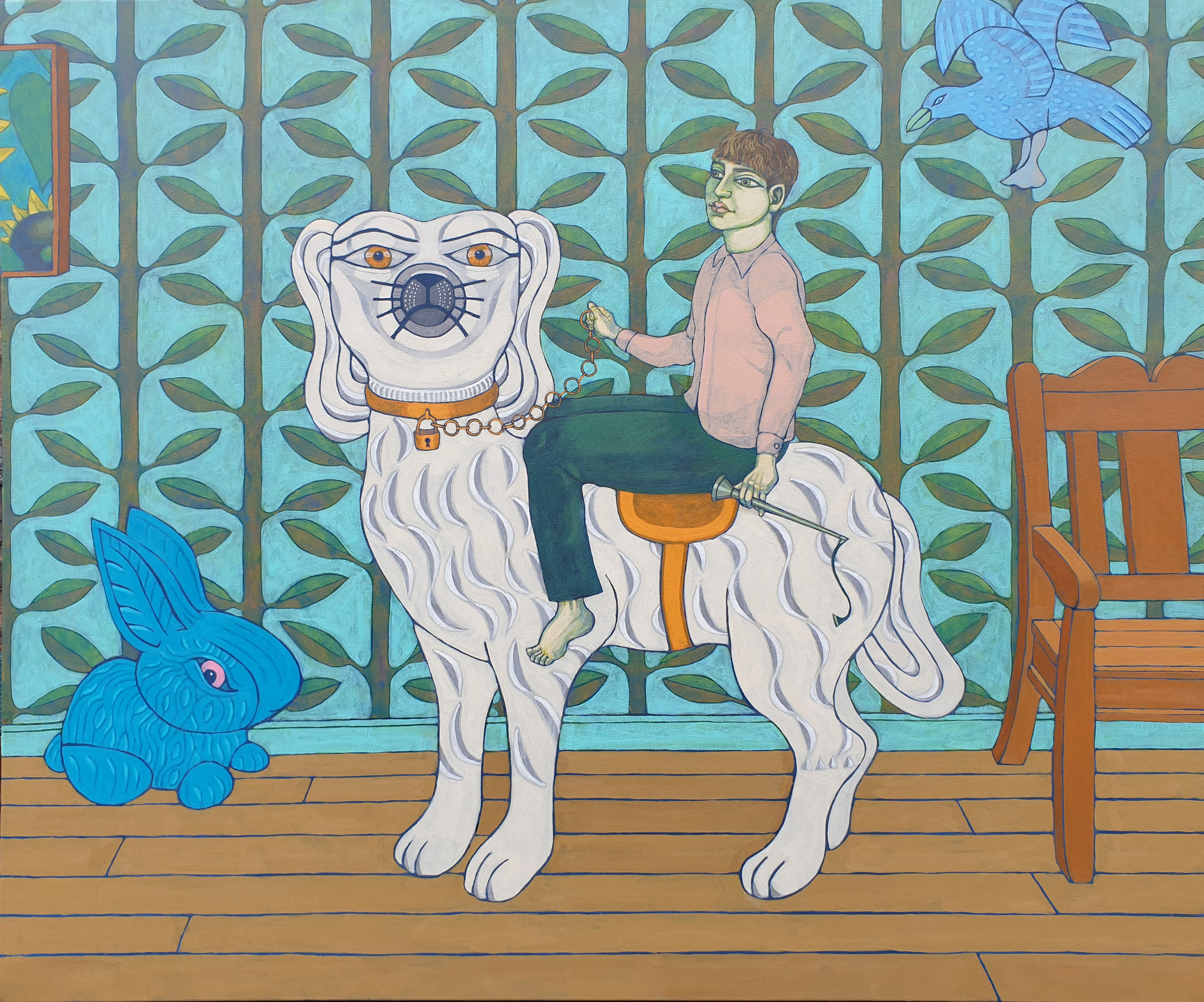
Back to nature (Right hand version), Acrylic on Canvas, 2023
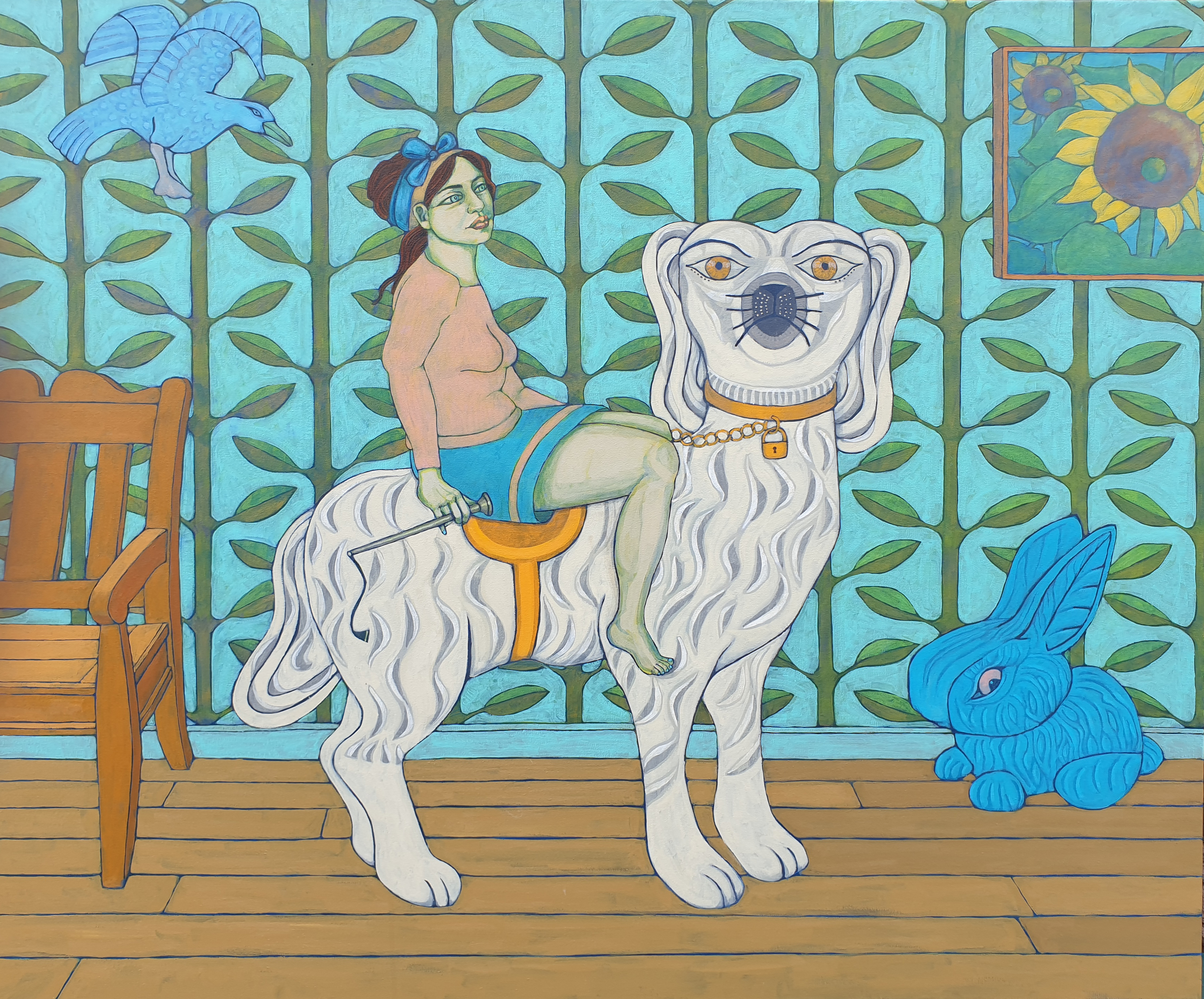
Back to nature (Left hand version), Acrylic on Canvas, 2023
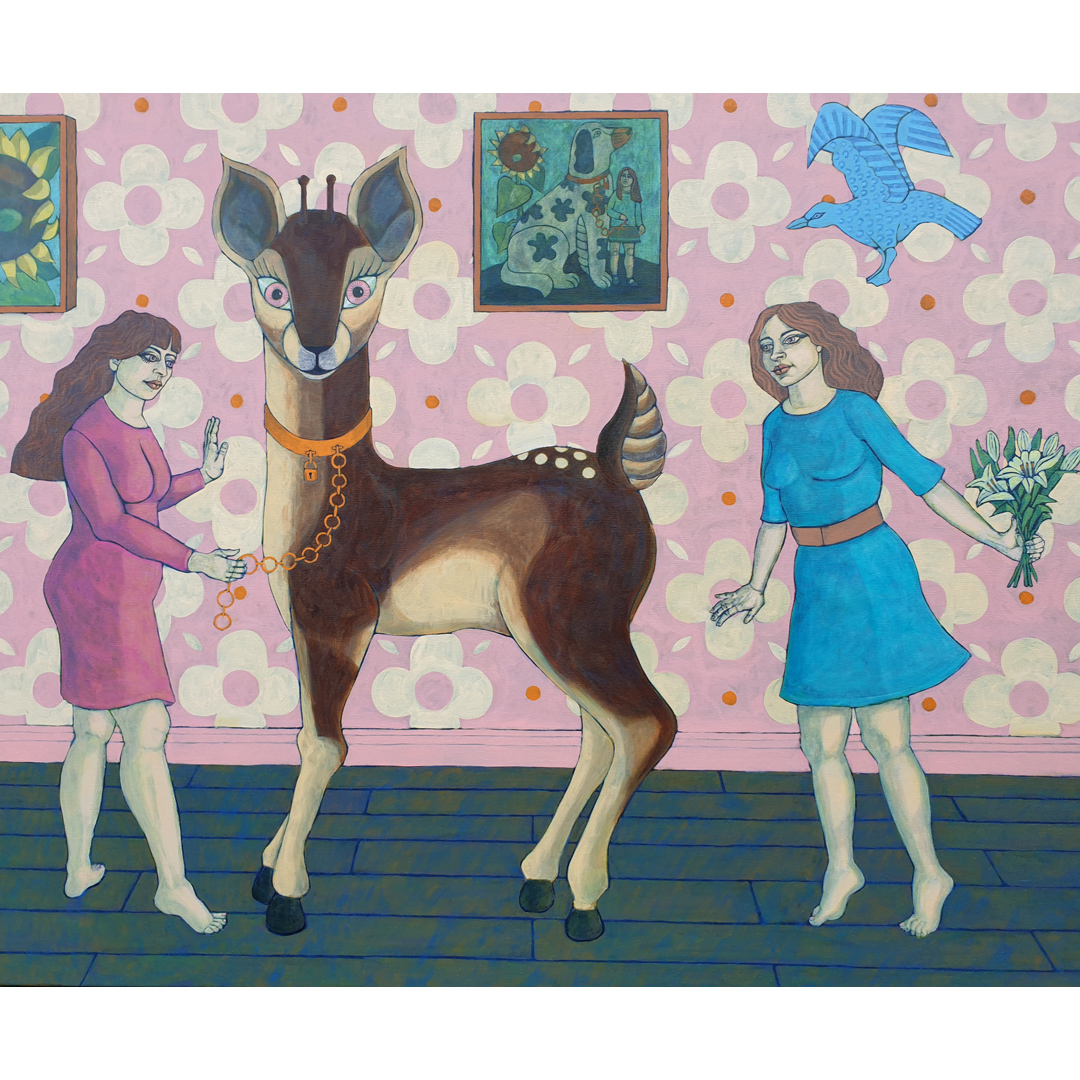
Fawnnunciation, Acrylic on canvas, 2023
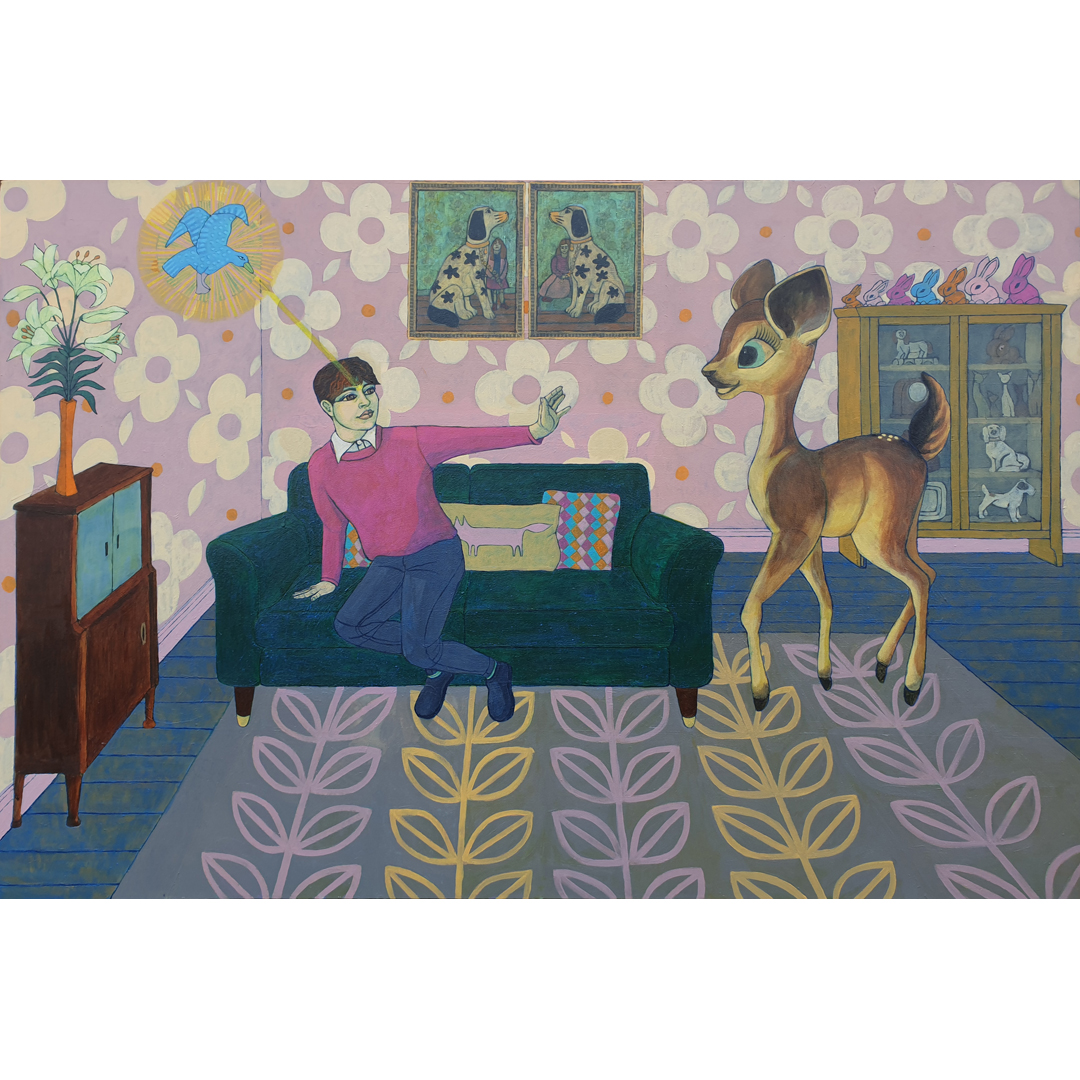
Fawnnunciation 2, Acrylic on canvas, 2023
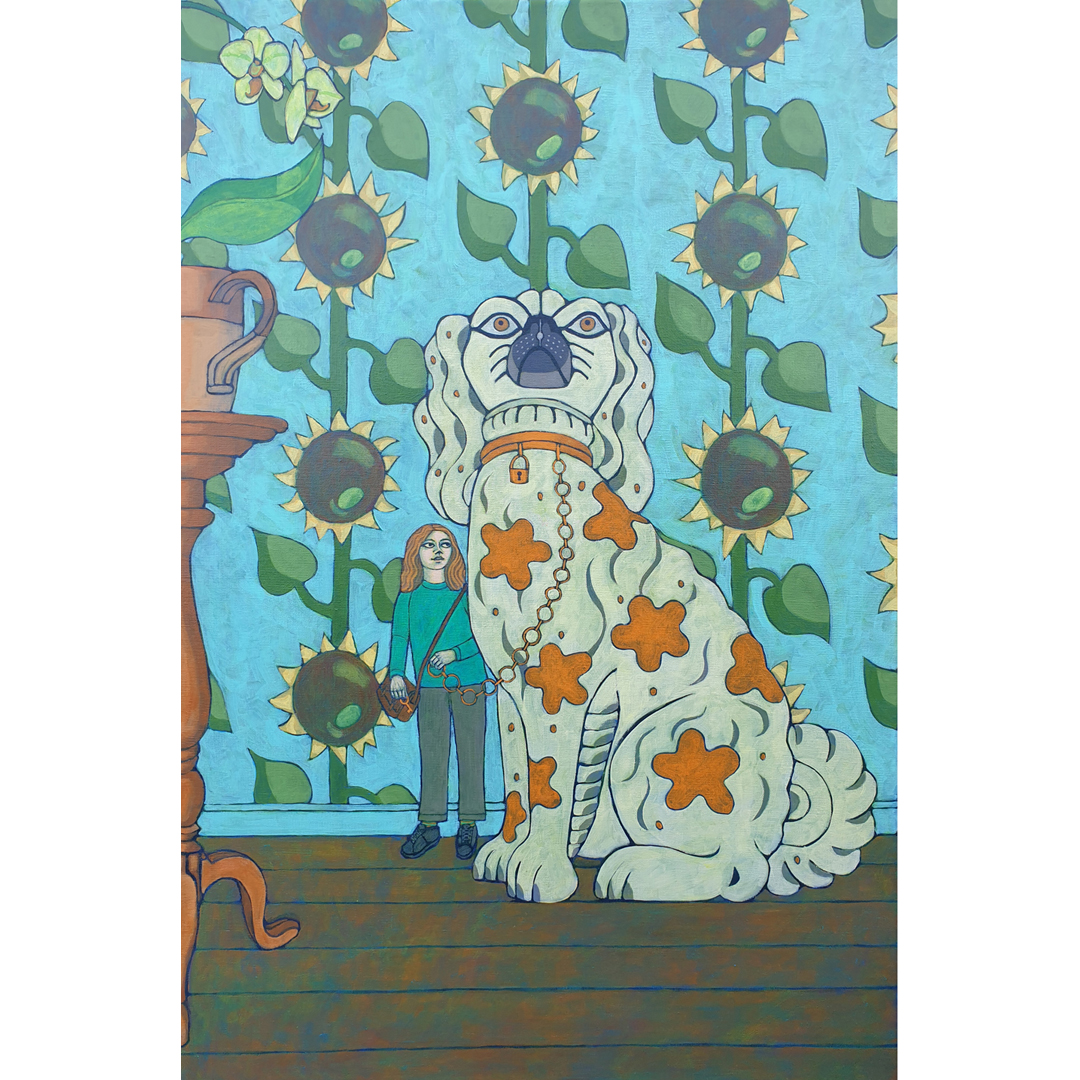
And then it's ok, Acrylic on canvas, 2023
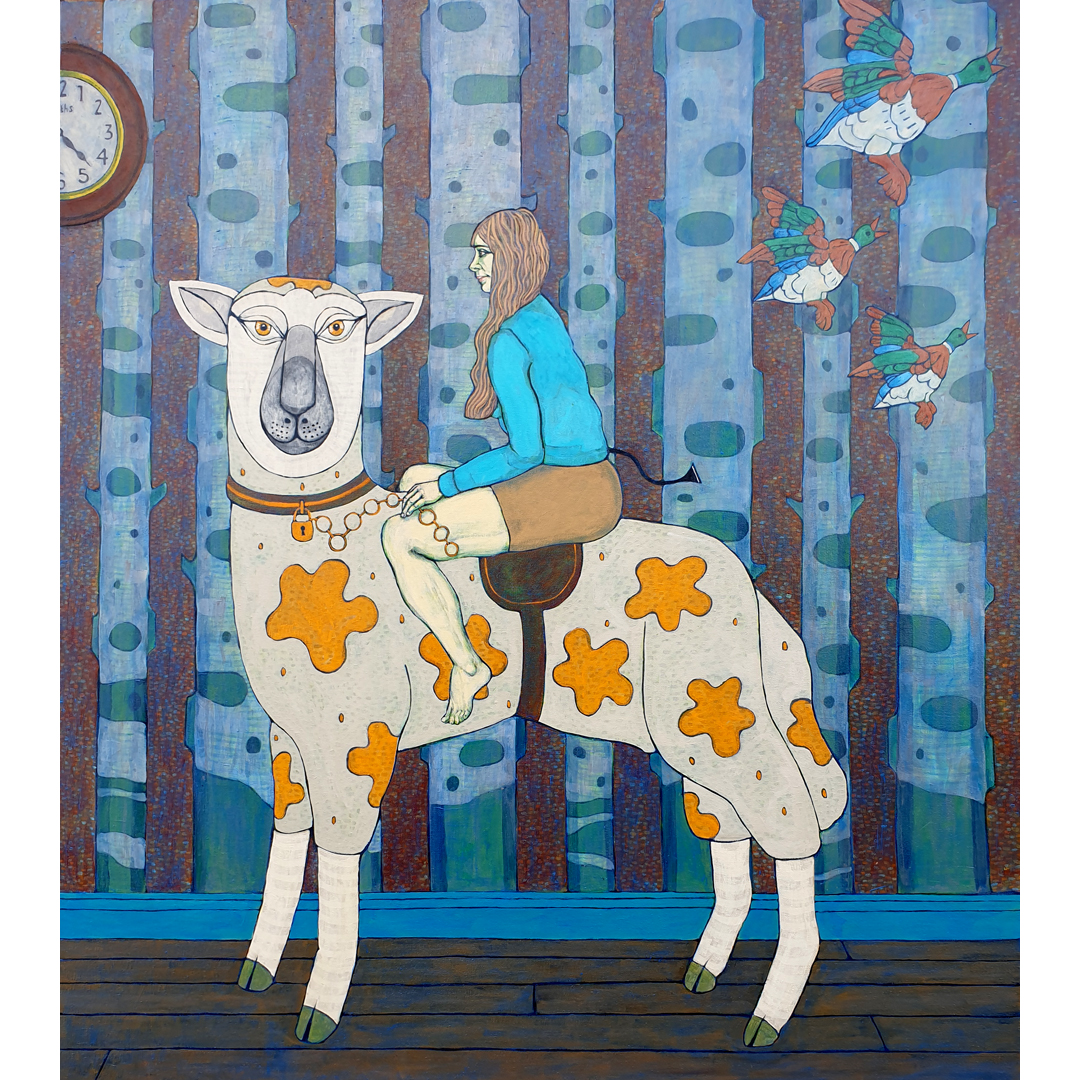
The road to nowhere, Acrylic on canvas, 2023
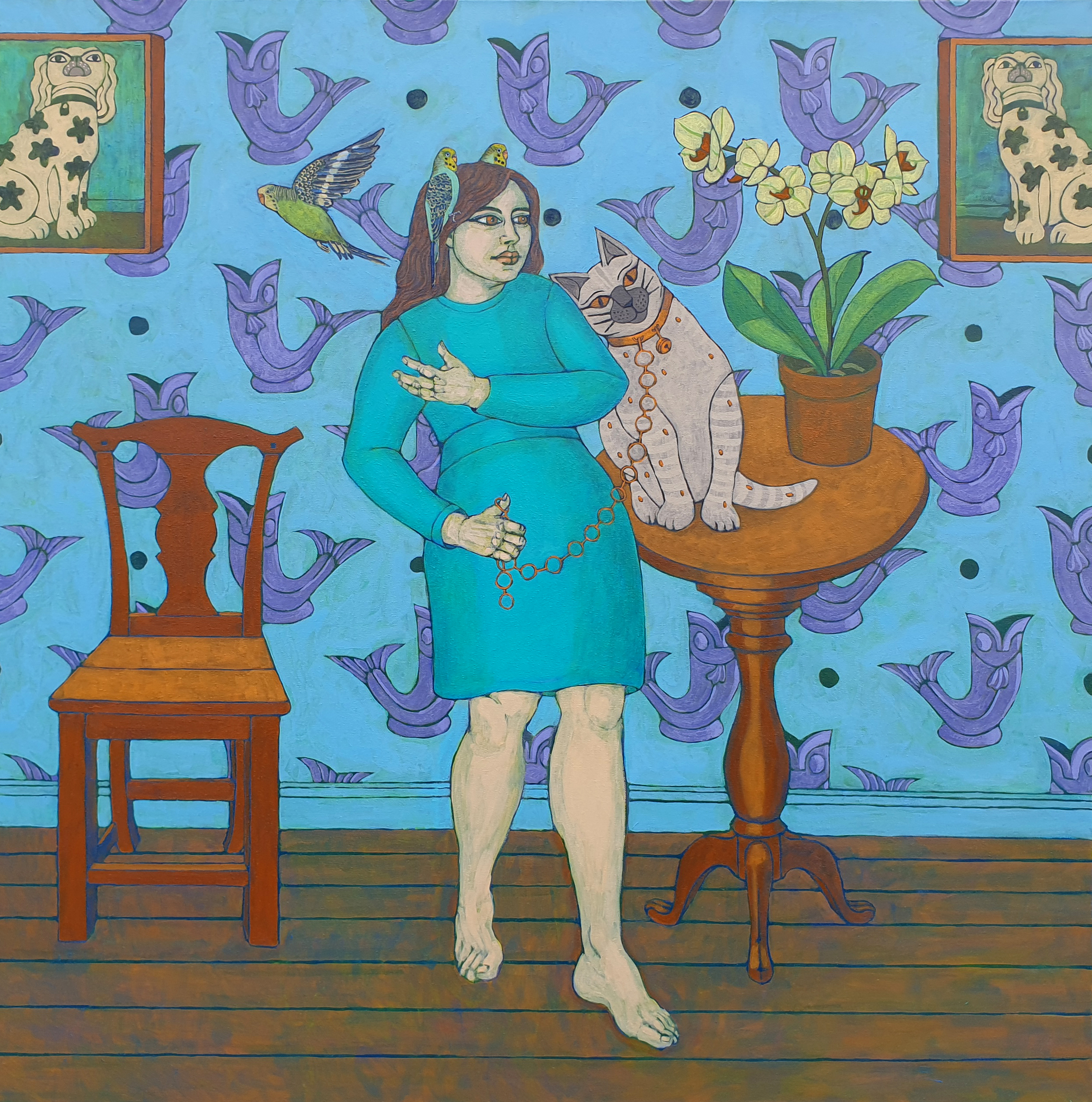
Complete control, Acrylic on canvas, 2023
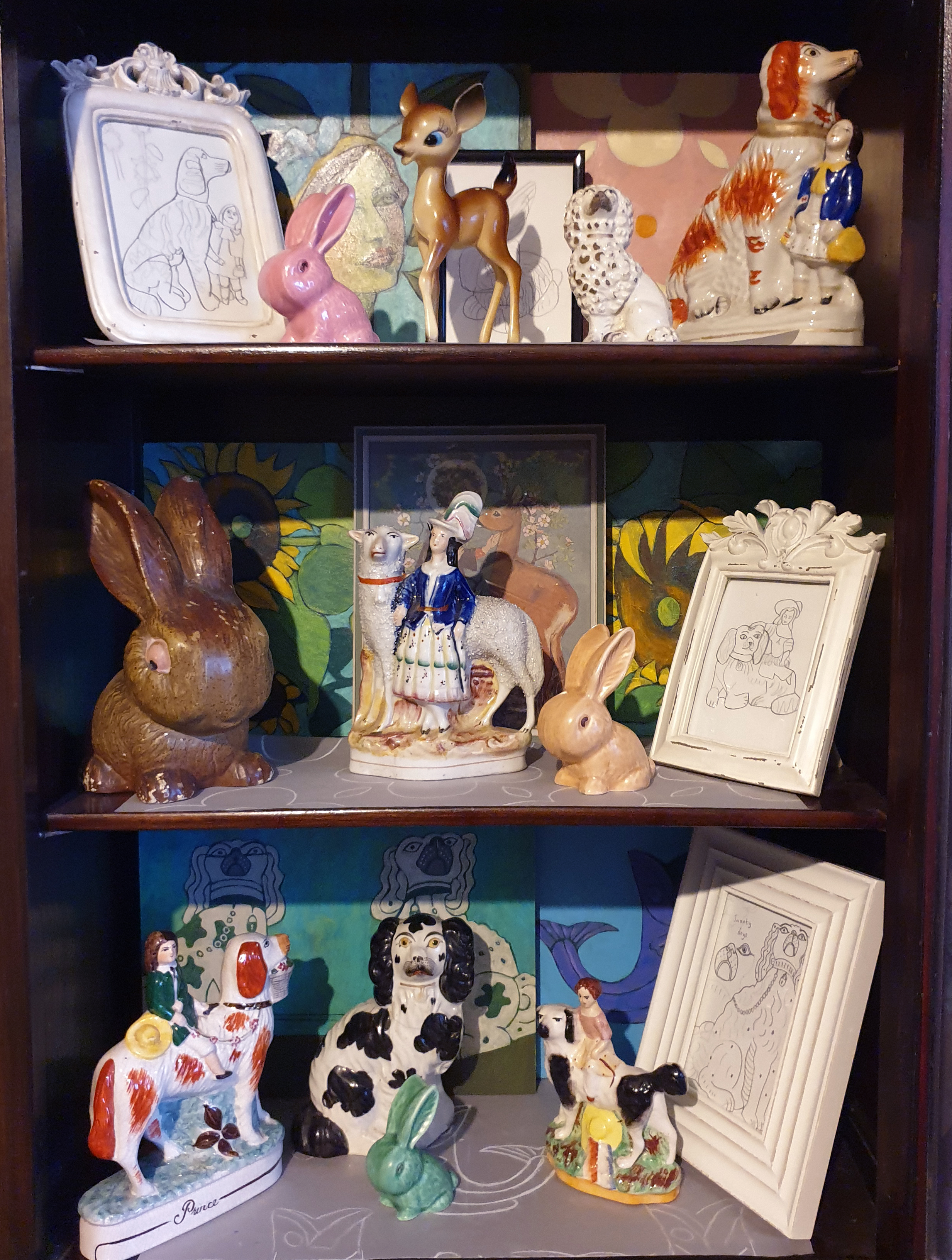
Cabinet of whimsy, mixed, collected items, tracings drawing, acrylic on board, 2024
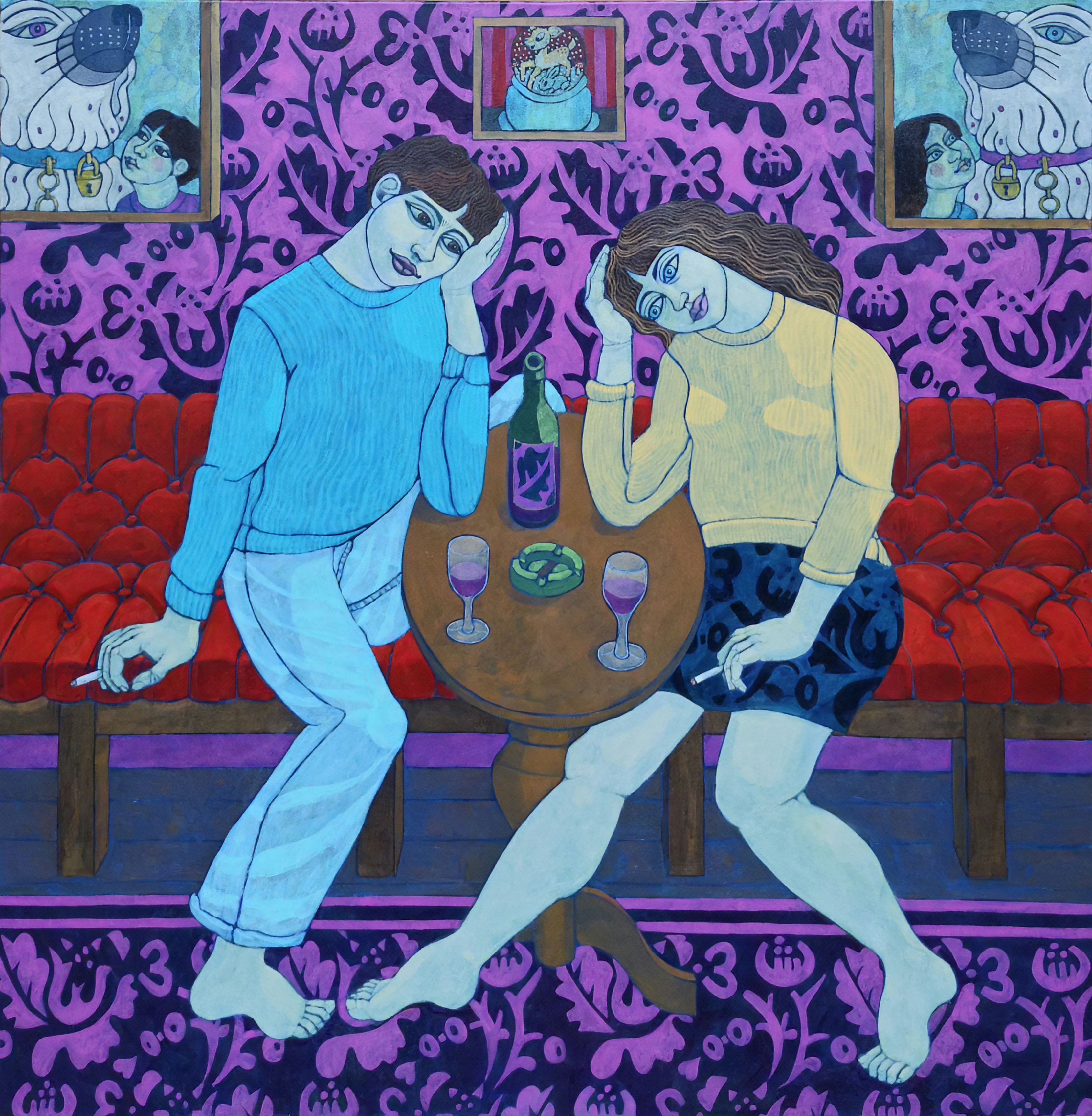
A red wine and a Consulate will make it alright, Acrylic on canvas, 2024
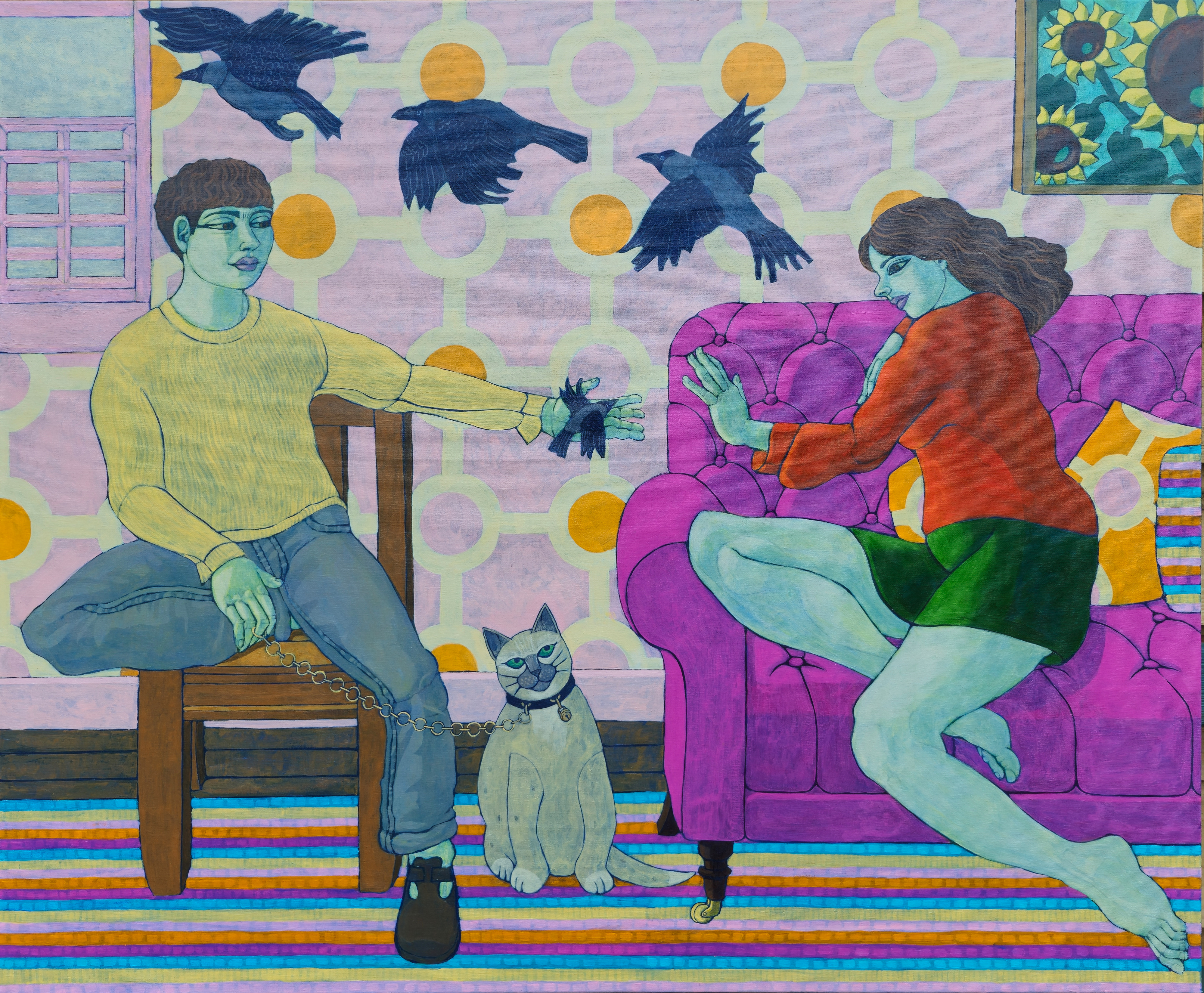
No not now, not ever again, Acrylic on canvas, 2025