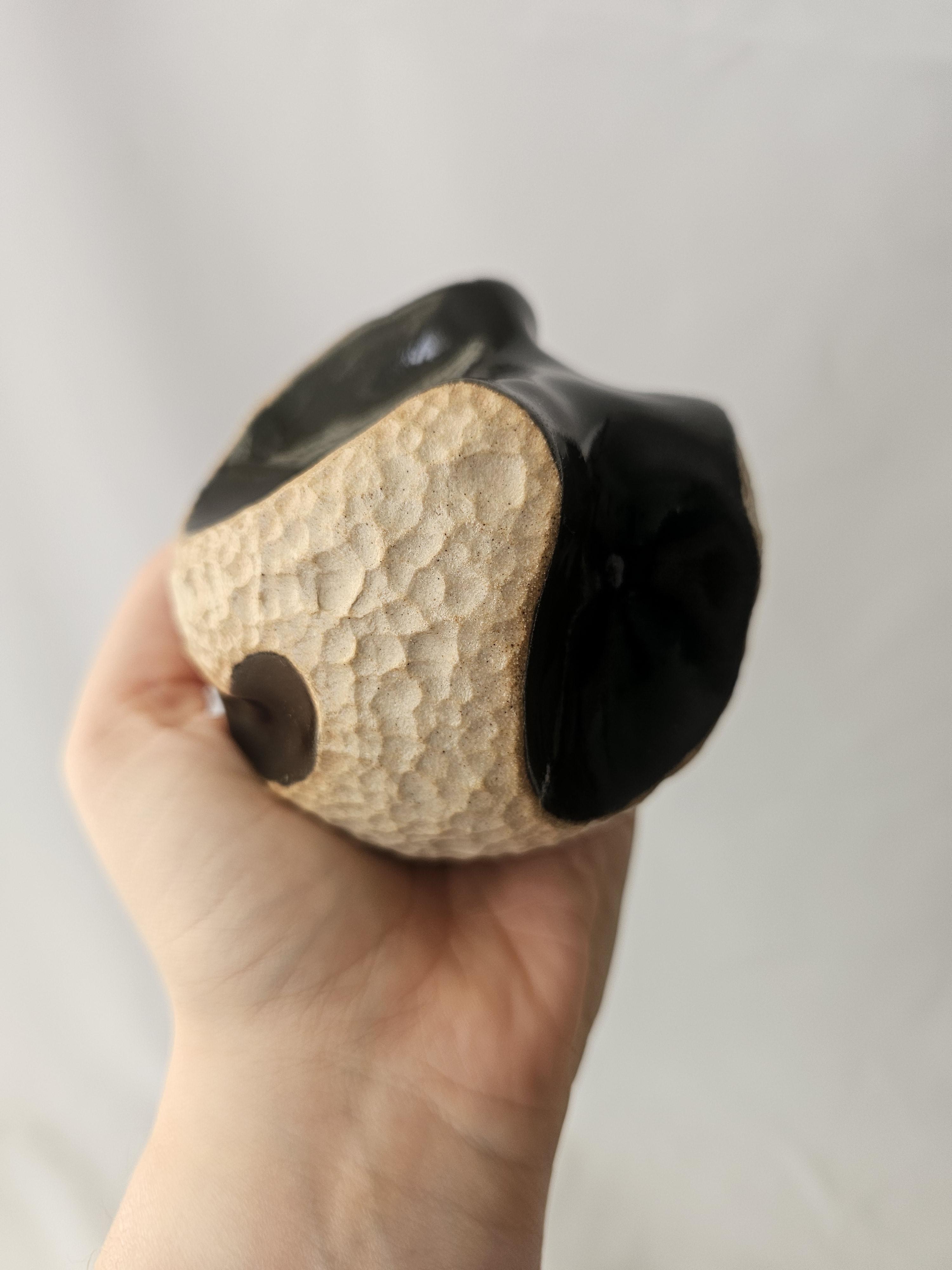
Leah Jordan Devon, United Kingdom


Leah Jordan is a Plymouth based ceramic sculptor. She graduated from Arts University Plymouth with a BA (Hons) First Class and an MA with Merit in 2022. Drawing inspiration from anatomy, biology, and transhumanist ideas, Jordan creates speculative sculptural forms that explore the hidden interior of the body and its potential future evolution.
Leah Jordan’s sculptural practice explores the hidden architectures of the human body through the lens of transhumanism, using anatomy as a point of departure for imagining possibilities of human evolution. Fascinated by the body's unseen systems and autonomous processes, Jordan investigates the strange biological forms that sustain life beyond conscious awareness. Each body of work focuses on a different internal system, transforming familiar anatomy into speculative sculptural forms that sit between recognition and invention.
Jordan’s making process involves moving repeatedly between drawing and sculpture. Each translation acts as a copy of a copy, with something becoming lost at every stage. Through this repetition, forms are gradually reduced to their essential characteristics, resulting in a simplified aesthetic that references transhumanist ideas of designed evolution, where technology and biology become increasingly intertwined. The work embraces abstraction as a way of revealing the inherent strangeness of the body and imagining new forms of biological existence.
Clay carries an embedded human history that Jordan finds pivotal when thinking about the future of the body. Clay is of the earth, grounding the artist in her making while creating a tension with the speculative futures explored through the work. Making also provides a meditative space to focus on something physical. In an age increasingly shaped by screens and artificial intelligence, maintaining a tangible relationship with materials and the body is an essential part of Jordan’s practice.
Working in sculpture is fundamental to Jordan’s exploration of the body. Sculpture requires the viewer to physically navigate the work and encounter it from multiple perspectives. Through these speculative forms, Jordan considers how technology may reshape our relationship with the body and asks at what point the boundaries between the biological and the artificial begin to dissolve.