
Will Roberts Glamorgan, United Kingdom


My paintings explore memory, craftsmanship, and the domestic objects that shape identity. Through imagined “False Objects,” I use paint to question value, nostalgia, and our desire to collect, preserve, and look more closely.
My current practice is centred around landscape painting and the quiet role these images play within domestic spaces. I often think about the paintings people grow up around or live beside for years without fully noticing anymore — the landscape above the fireplace, the picture halfway up the stairs, or the painting that has always been there but whose story no one quite remembers. I’m interested in how these objects absorb memory and familiarity over time, becoming part of the emotional atmosphere of a home.
The paintings I make are imagined landscapes built through memory rather than direct observation. I don’t work from photographs or specific locations; instead, the images emerge slowly through intuition, repetition, and surface. I want them to feel familiar in the way an inherited painting does — recognisable, comforting, and slightly distant at the same time. I think of them as “false objects”: paintings that seem to belong to a shared memory despite never having existed before.
Landscape is important to me because it is such a common and enduring genre within the home. These paintings often exist quietly in the background of everyday life, shaping the feeling of a space almost subconsciously. I’m drawn to that balance between presence and invisibility — how an image can hold emotional weight while still blending into the rhythms of daily living.
The text embedded within the paintings comes from imagining where these works might exist in a house. Phrases like The One at the Top of the Stairs or The Old One by the Door mimic the casual way people refer to familiar objects over time. The wording gives each painting an implied history, as though it has already been lived with, remembered, or passed between homes.
Working in oil paint has become central to this process. I’m drawn to the slower pace of the medium and the way surfaces can be gradually built over time. The texture of the paint and the use of simple framing help me think about each work as a complete object — something made to exist within lived space, rather than simply to be looked at.
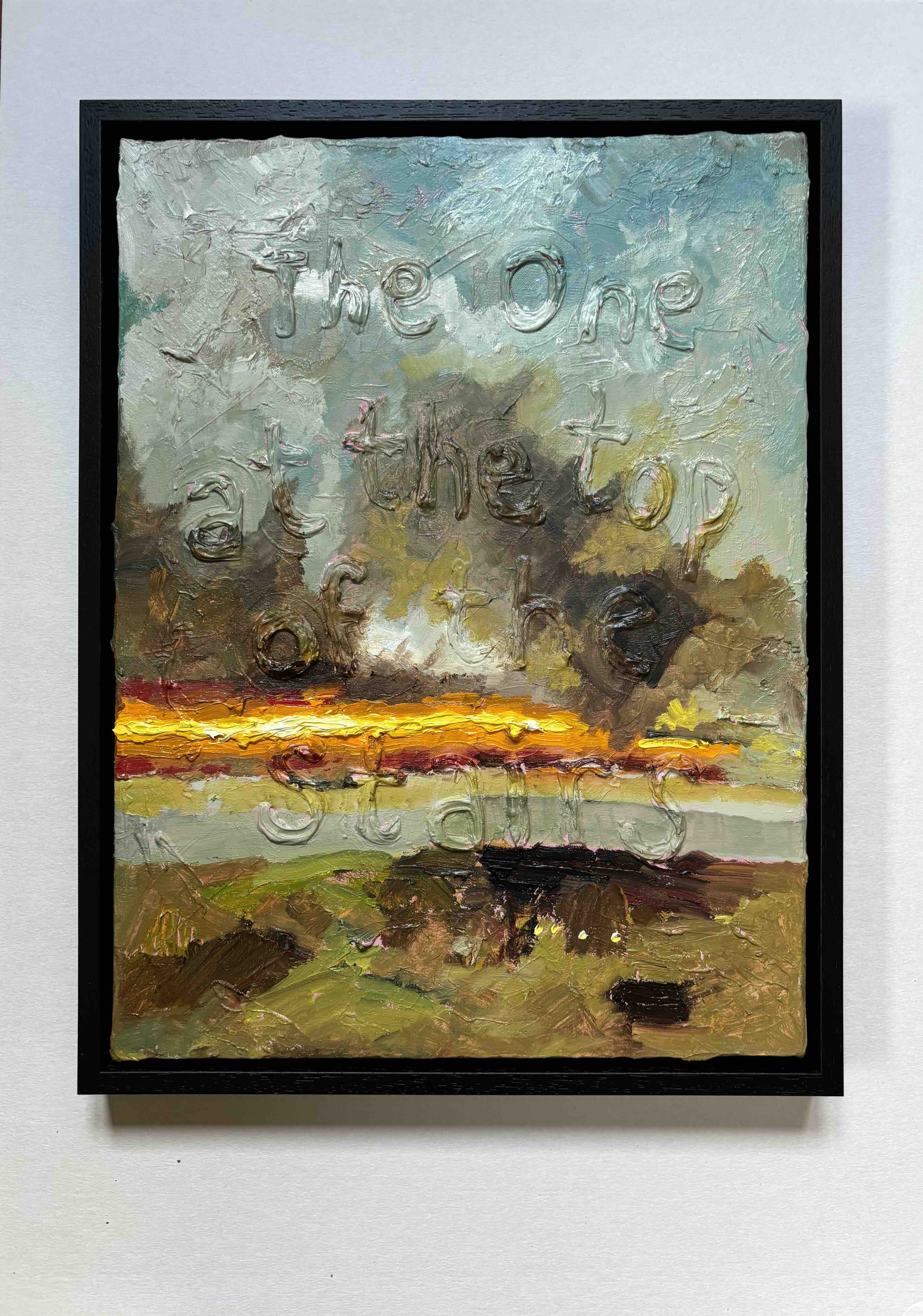
Artwork
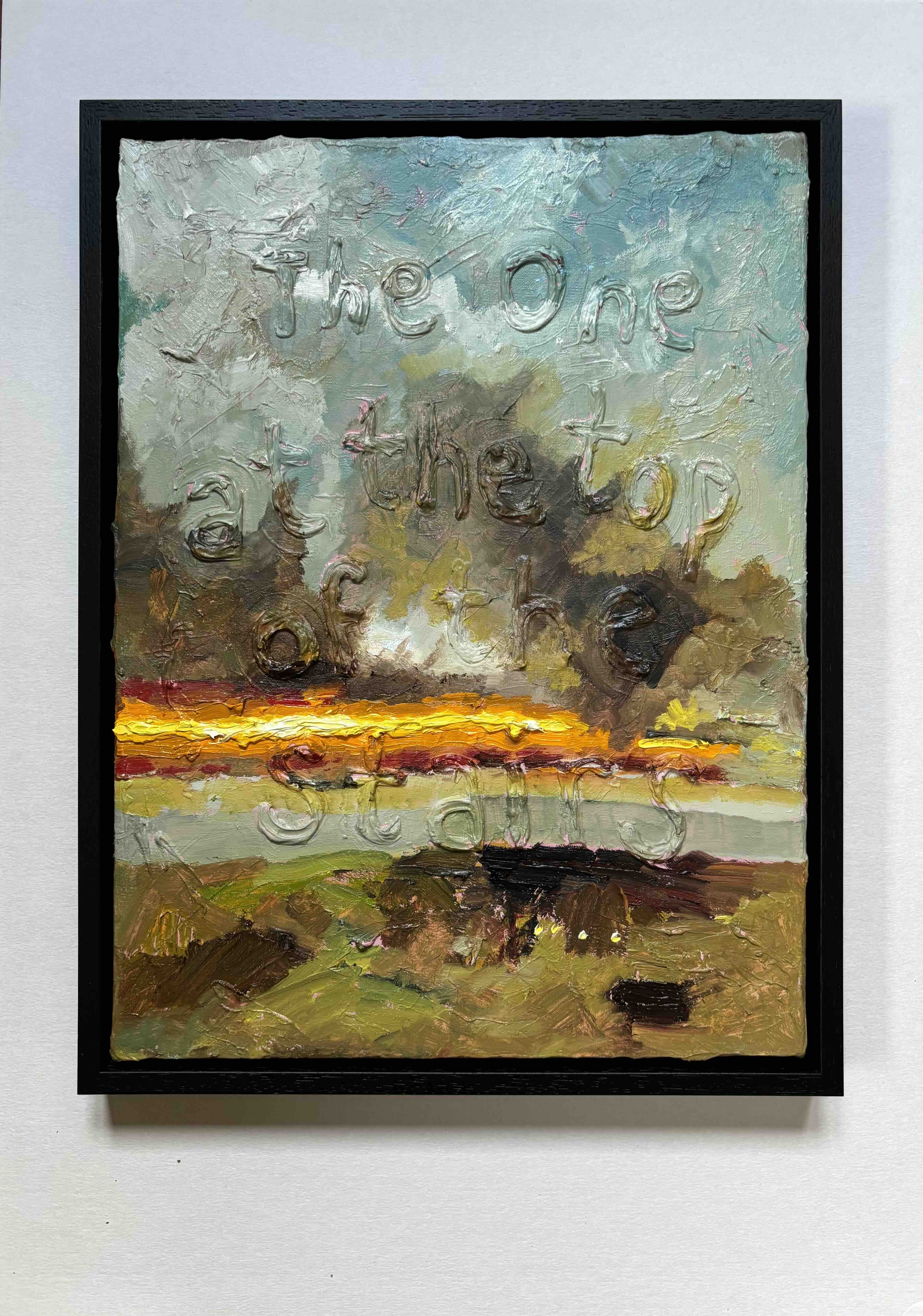
The One at the Top of the Stairs, Oil on canvas, framed., 2026