
Case Study: Alan Dunn
Alan Dunn is an artist, lecturer, curator, and Reader in Art & Design at Leeds Beckett University where he lectures on the MA Fine Art course. Through his collaborative projects, he has worked with Bill Drummond, Douglas Gordon, Yoko Ono, Bikini Kill, Philip Jeck, redmentv, Pauline Oliveros, Einstürzende Neubauten and Brian Eno.
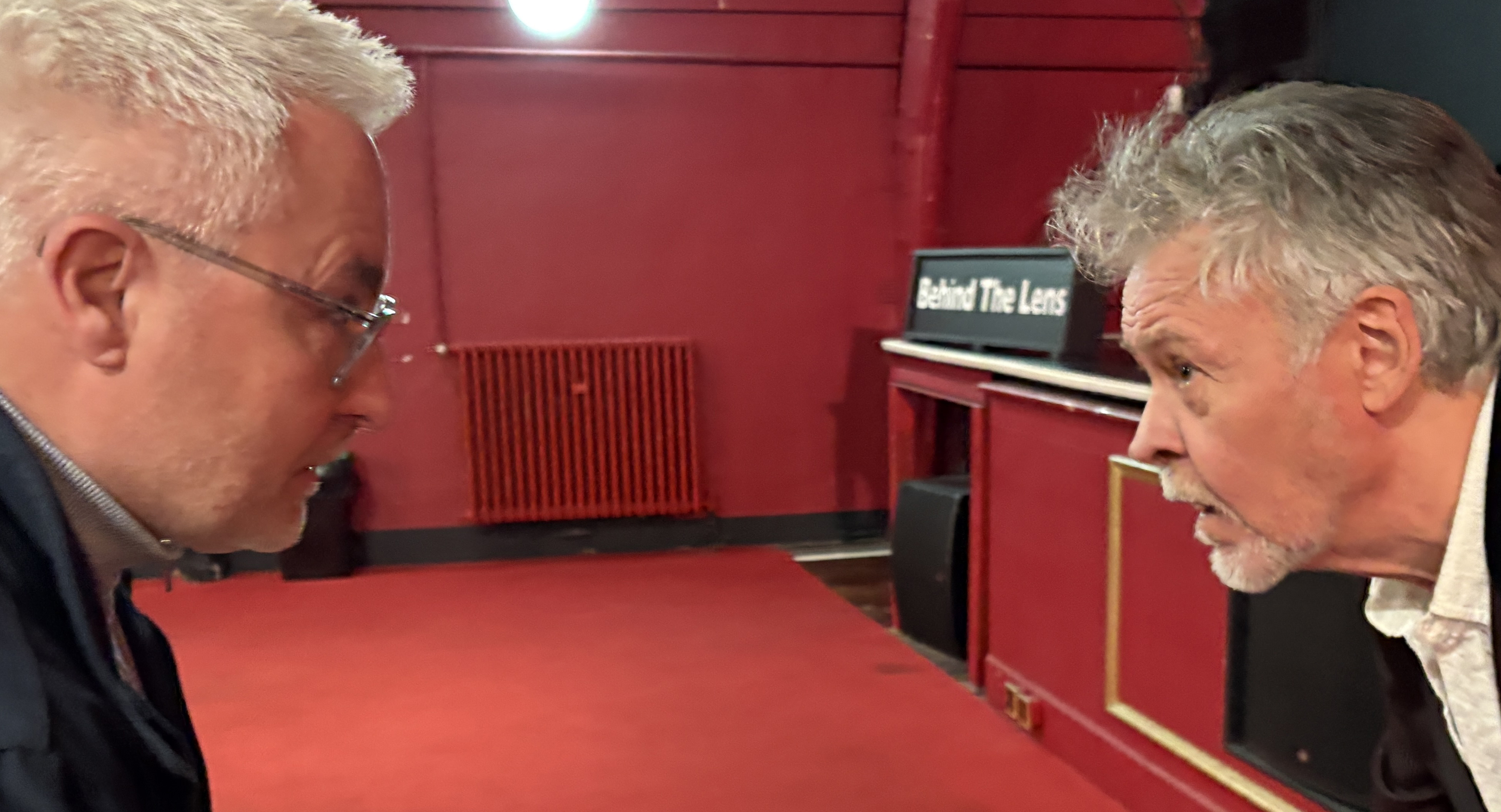
"I'm an artist and lecturer, born in Glasgow in 1967, and a lover of football, records and art projects that sometimes bring all those together. I moved to Liverpool City Region in 1995 with my partner whom I met at art school and we still work from there. Most of my projects exist beyond the gallery in some way, inviting new people to speak and trying to create content that sits somewhere between an avant-garde and an everyday.
Examples include the Bellgrove Station Billboard Project (Glasgow 1990-91) with new hand-painted billboards at an east end railway station from artists, author James Kelmen, an urban planner, an aromatherapist and some of my fellow students, including a future Turner Prize winner. Others include RAY + JULIE (Liverpool 1995-2023) the sculpture with Brigitte Jurack which was commissioned to last 6 months but remained for 27 years, and led to The Guardian listing them as one of Britain’s TOP TEN secret outdoor sculptures and me winning the first ever Liverpool Sculpture Prize. Everyman Theatre also commissioned a play about them.
Some current projects that have me in their thrall include ZERO PLAN that has a current opportunity here on CuratorSpace and a series of previously unseen photographs taken by my dad that we've found since he passed away. They capture an amateur perspective on a pre-digital east end of Glasgow in the 1970-80s of imaginative play, mud, wild carpets and some bizarre backgrounds.
After I graduated from Glasgow School of Art in 1991 I immediately went freelance with ten years of doing workshops and residencies across the country, including on the Raffles estate in Carlisle, with Big Issue vendors and Great North Run participants. Then between 2001-7 I was lead artist with FACT in Liverpool on the tenantspin community internet TV project. I learned so much from that project which is still regarded with a kind of magical esteem in the city. We worked pre-broadband with high-rise pensioners and unfolded the project in many directions, giving voice and attention to so many isolated and legendary people.
Our education in the Environmental Art Department at Glasgow School of Art, under the incredible support, rigour and kindness of David Harding and Sam Ainsley, included finding our own contexts for presenting art - mine became billboards - and collaborations. Whilst studying, I started working with Easterhouse Arts Project on murals and workshops, building on the fact my mum and dad both had 'social hobbies' in that area near where we lived, namely running arts & craft workshops and being 'president' of the Easterhouse Camera Club respectively. I realised doing that work that I was a good listener and that people felt comfortable and safe expressing their own voices and visions with my help.
But mixed into this approach was also a fear of being alone in a studio, drawing or painting away with only voices in the head and the many studio soundtracks of Cocteau Twins, Hüsker Dü, Melt Banana, Altered Images, Talking Heads or Nancy Sinatra. I became hooked instead on extricating nuggets from conversations, listening to people (and later animals), working with unknown factors and the energy of collaboration and the thrill of those meetings, emails or phone calls that allow projects to move forward.
Over the years, such collaborations have ranged from minutes, hours, months through to decades, including the Andy Warhol Foundation, David Shrigley, Yoko Ono, Hillsborough Justice Campaign, Bikini Kill, Einstürzende Neubauten, retired sea captains, Guided by Voices, Anthony Burgess Foundation, Brian Eno, Singh Twins, Jamie Reid, market traders in Ty Pawb, BBC Radio 3, Lydia Lunch, Superflex, dementia care homes, Chris Watson, David 'supersub' Fairclough, Anthony H Wilson, Foreign Investment and Mike McCartney.
In terms of identifying artists to collaborate with, I think a big challenge is often working on no/low budget projects that are full of enthusiasm but that mean asking artists to submit on a non-financial basis. During Covid I did raise some Arts Council funds meaning I could pay fees to artists (80% of which I paid to them upfront) but that’s time-consuming and not always in the best interest of the project momentum.
Sometimes issues with managing submissions can also be practical and as basic as computer memory! When I was curating some content for big electronic billboards for example I would be receiving and editing lots of large video files and if there were two other projects running at the same time, my laptop certainly struggled. Overall with managing submissions and projects - and this is something I learned from Lynda Morris in Norwich when we took part in EAST - I think that clear and early communication about every aspect of a project is key, for once people know what, why and when they are doing something, I can let them get on with the sparky stuff.
CuratorSpace has streamlined what can be complex processes whilst opening up huge numbers of people as potential collaborators. My first interaction with CuratorSpace was back in 2013 in relation to an East Street Arts residency and over the years I’ve become involved in a few projects via CuratorSpace that I simply wouldn’t have found out about otherwise.
Without it, many projects would be a process of contacting existing networks and asking them to share the opportunity and so forth. That, plus managing the whole application, FAQ and deadline situations would be a lot messier. Again, it allows you to keep your project in the foreground and retains a real excitement at receiving surprising submissions.
Each year I direct BA and MA Fine Art students to CuratorSpace opportunities, with the caveat of always looking out for any 'hidden' fees that can sometimes be applied by the host organisation only once a proposal has been accepted. The templates for creating opportunities are very useful too, as is the sense that every opportunity has been checked by CuratorSpace prior to appearing.
I first posted an opportunity on CuratorSpace back in 2017 to find some vocal recordings for an instrumental sound art piece and the process is so smooth and logical that it allows you to focus on making new connections and developing content with artists you haven’t met yet. And I find it's often in the dialogues, even with artists I couldn’t work with on a particular project that some interesting new relationships emerge, that’s happened quite a lot. For example, meeting Kristie Wickwire from the Please Hold magazine and more recently I’ve been chatting with Jenna Fox of haus-a-rest after submitting for an issue.
Whilst preparing my recent opportunity, CuratorSpace were excellent in making me think about the balance between not being able to offer fees but being able to pay production costs, give a copy of the final artwork and welcome successful artists in an expanding network, so it continues to have a kind of professional mentoring role too."
You can connect with Alan via his Instagram or website or just drop him an email at alandunn44@gmail.com. You can also take part in his ongoing project, Zero Plan by clicking here.
Get the latest CuratorSpace news, updates about new opportunities, upcoming deadlines, and art-related promotions.
CuratorSpace isn't another listings website; it's a place where curators and organisers can use custom online forms to allow artists to apply to their opportunity. It also allows you to see and manage all submissions made to your opportunity on the website, and to contact contributors directly.
Register now and you can start making submissions and even create your first opportunity for free.